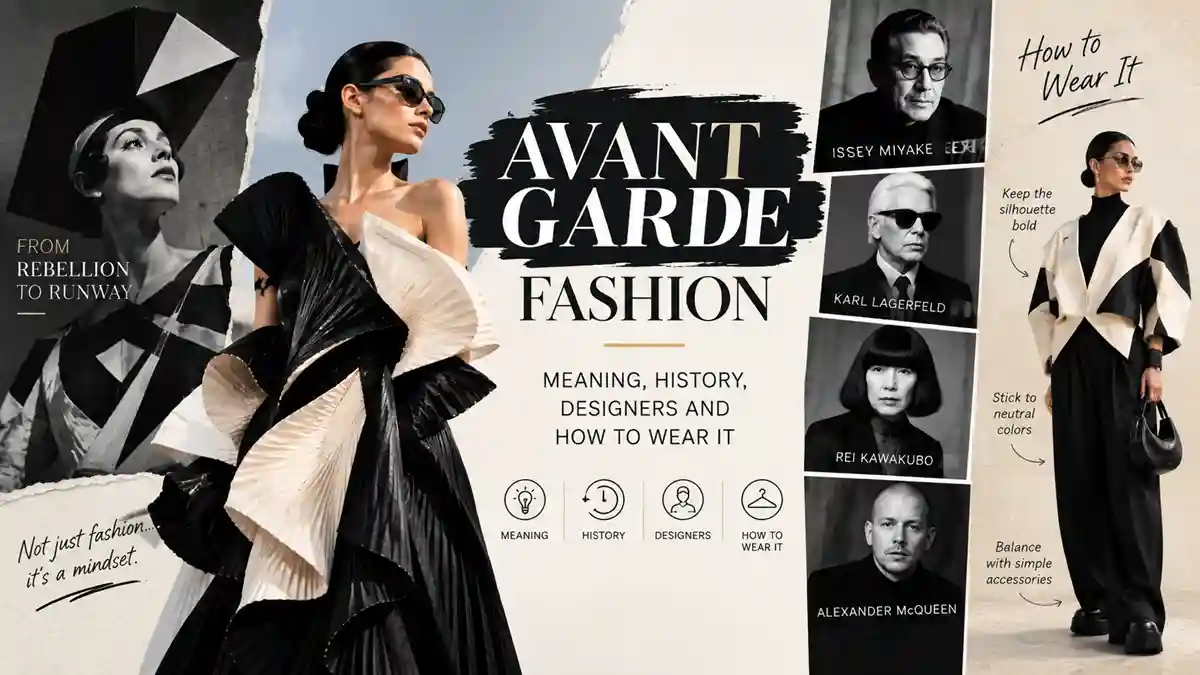
Avant Garde Fashion Meaning, History and Top Designers
You have probably seen the photos a coat that looks like folded paper, a dress with a sleeve where a hem should be, a runway look that seems to ask is this even clothing? That reaction is exactly what avant garde fashion is designed to provoke.
The term gets used loosely, which makes it confusing. Is it a style you can wear, a type of designer or just a runway stunt? This guide explains what avant garde fashion means, where it came from, what defines it, who the key designers are and how to wear it without looking like you are in costume.
Quick Answer
Avant garde fashion is experimental clothing that prioritizes ideas, artistry and innovation over convention or everyday practicality. Defined by unusual silhouettes, unconventional materials and rule breaking construction, it treats garments as wearable art. Pioneers include Rei Kawakubo, Yohji Yamamoto, Alexander McQueen, Issey Miyake and Iris van Herpen and most people wear it through one statement piece at a time.
What Is Avant Garde Fashion?
Avant garde is French for advance guard or vanguard, a term borrowed from military language. It describes people and work that are experimental and ahead of their time and it was first applied to movements in art and culture before fashion.
In fashion, avant garde means clothing that questions what a garment should be. Where mainstream fashion asks will this sell and flatter?, avant garde fashion asks what idea does this express? A designer might ask what happens if a jacket has no front, if a seam is worn on the outside or if a dress is 3D printed.
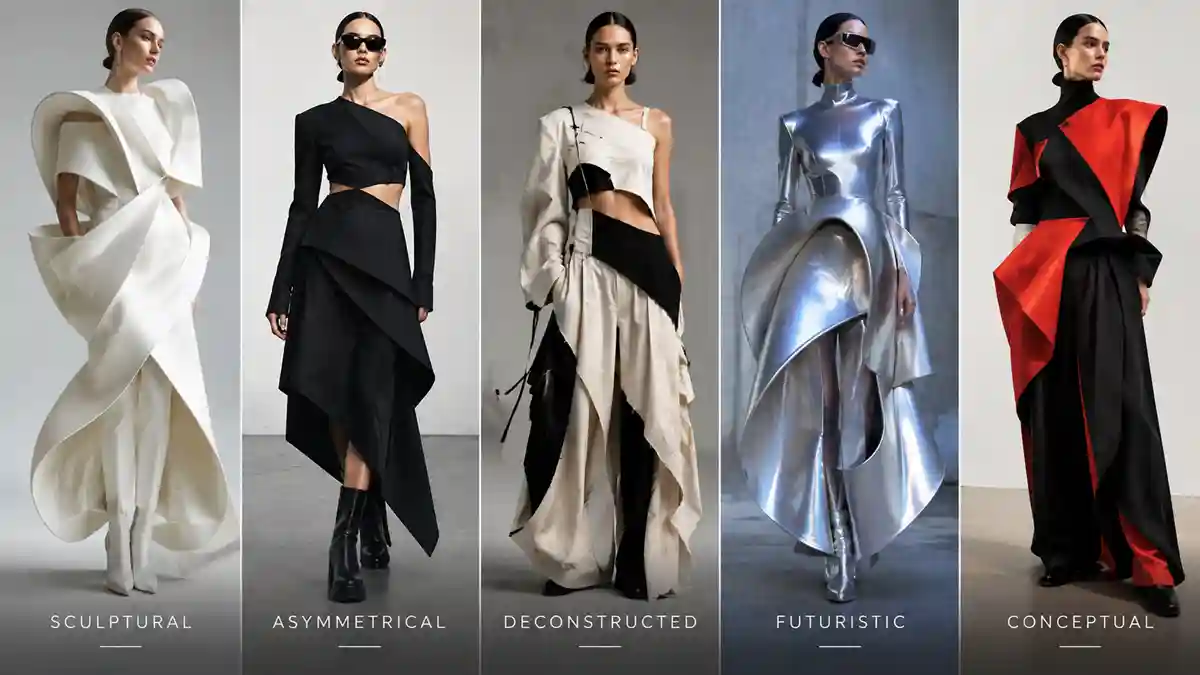
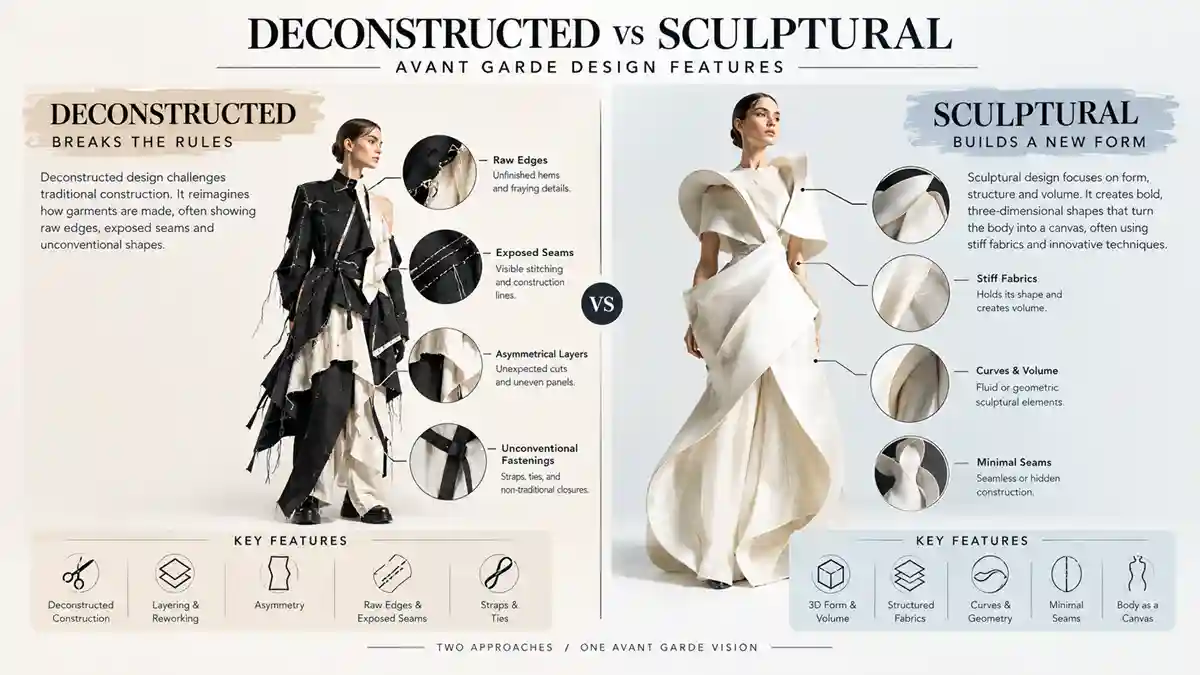
The result is often called experimental, conceptual or artistic fashion. These labels overlap but they are not identical. Avant garde is the umbrella term and conceptual, sculptural and deconstructed fashion are styles within it.
A Short History of Avant Garde Fashion
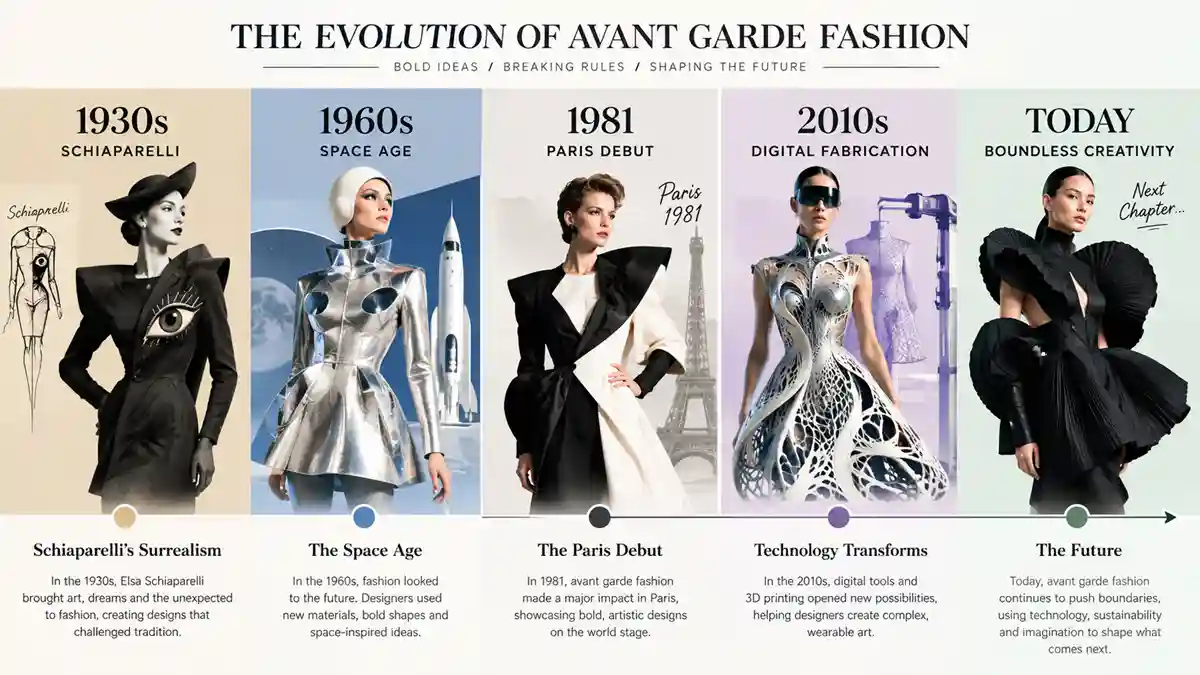
Avant garde fashion grew out of the wider avant garde art movements of the early 20th century. Surrealism is a clear early example designer Elsa Schiaparelli collaborated with artist Salvador Dalí in the 1930s on pieces such as the lobster dress.
The idea reached the runway in force during the 1960s. Designers including Pierre Cardin, Paco Rabanne and André Courrèges used geometric shapes, metal, plastic and space age themes to break with traditional dressmaking.
The next major shift came in 1981, when Japanese designers, notably Rei Kawakubo of Comme des Garçons and Yohji Yamamoto, showed in Paris. Their black, oversized, asymmetrical, deliberately unfinished clothes contrasted sharply with the polished styles of the time and early press reactions were hostile. The look proved hugely influential and designers such as Martin Margiela and Ann Demeulemeester are frequently cited as drawing on it.
In the following decades, Alexander McQueen brought theatrical spectacle to the runway and designers such as Iris van Herpen brought digital fabrication into couture. Today the avant garde spirit also spreads through social media, where wearers reinterpret runway ideas.
Pakistani Ethnic Clothing Brands: The Complete Buyer’s Guide
Key Characteristics of Avant Garde Fashion
Not every unusual outfit is avant garde. These traits, usually appearing together, define it
Limitation These are common patterns, not a formal checklist. Critics and designers disagree about where avant garde ends and simply unusual begins and the boundary shifts as once shocking ideas become mainstream.
Popular Avant Garde Fashion Styles
| Style | Core idea | Typical features | Designers to explore |
|---|---|---|---|
| Deconstructed | Take garments apart and expose how they are made | Raw hems, visible seams, unfinished edges | Rei Kawakubo, Maison Margiela |
| Sculptural / architectural | Clothing as three dimensional form | Rigid volume, folds, structured shapes | Issey Miyake, Iris van Herpen |
| Conceptual | The garment communicates an idea or story | Distorted bodies, themed collections | Rei Kawakubo, Viktor & Rolf |
| Futuristic | Explore new technology and materials | Metallics, 3D printing, engineered fabrics | Iris van Herpen, Paco Rabanne |
| Asymmetrical | Reject balanced, mirrored design | Uneven hems, single sleeve tops | Yohji Yamamoto |
Famous Avant Garde Fashion Designers
Rei Kawakubo (Comme des Garçons)
Born in Tokyo in 1942, Kawakubo did not formally study fashion. She studied fine arts and literature and her work explores deconstruction and the relationship between body and garment. The Metropolitan Museum of Art’s Costume Institute honored her in 2017 with the exhibition Rei Kawakubo/Comme des Garçons Art of the In Between.
Yohji Yamamoto
Known for black, loose, draped clothing with asymmetrical cuts. His work treats the space between fabric and body as part of the design.
Alexander McQueen
The British designer (1969–2010) was known for dramatic, emotional runway shows and precise tailoring. His 1999 show, in which robotic arms spray painted a dress on stage, is among fashion’s most cited moments.
Issey Miyake
The Japanese designer (died 2022) pioneered technical pleating and innovative fabrics, most famously in his Pleats Please line. His work shows that avant garde can also mean functional innovation.
Iris van Herpen
The Dutch designer combines traditional craft with 3D printing and other digital techniques and shows during Paris Haute Couture Week.
Other frequently cited names include Rick Owens, Viktor & Rolf, Gareth Pugh, Thierry Mugler and Junya Watanabe.
Avant Garde Fashion vs Haute Couture vs Traditional Fashion
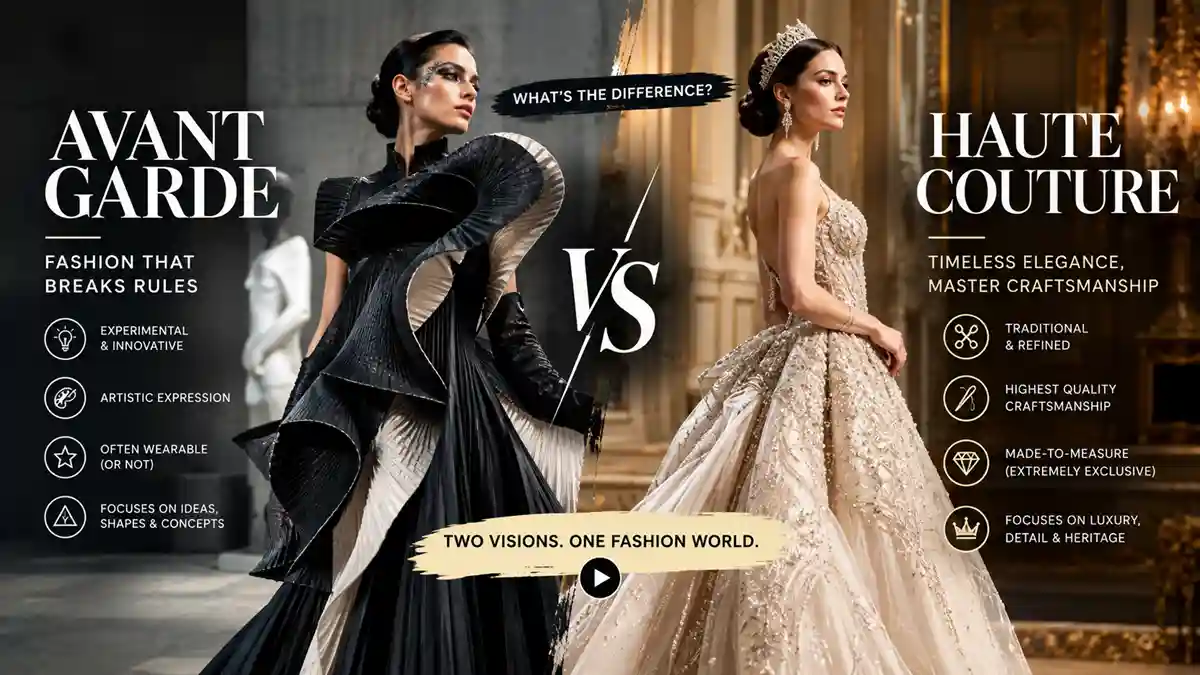
These terms overlap but describe different things. Haute couture is a legally protected French designation that depends on strict criteria and handcrafted production. Avant garde is not regulated. It is a creative approach.
| Avant garde fashion | Haute couture | Traditional / ready to wear | |
|---|---|---|---|
| Defined by | Concept and experimentation | Handcraft, made to order and formal regulation | Wearability and market appeal |
| Regulated? | No | Yes (French designation) | No |
| Wearability | Often secondary | Varies; often occasion based | Primary goal |
| Overlap | Can appear in couture (e.g., Iris van Herpen) | Can be avant garde | Sometimes borrows avant garde details |
Streetwear differs again it grows from community, subculture and logo driven brand identity, while avant garde grows from artistic concept. Some designers, such as Rick Owens, sit between the two.
How to Style Avant Garde Clothing
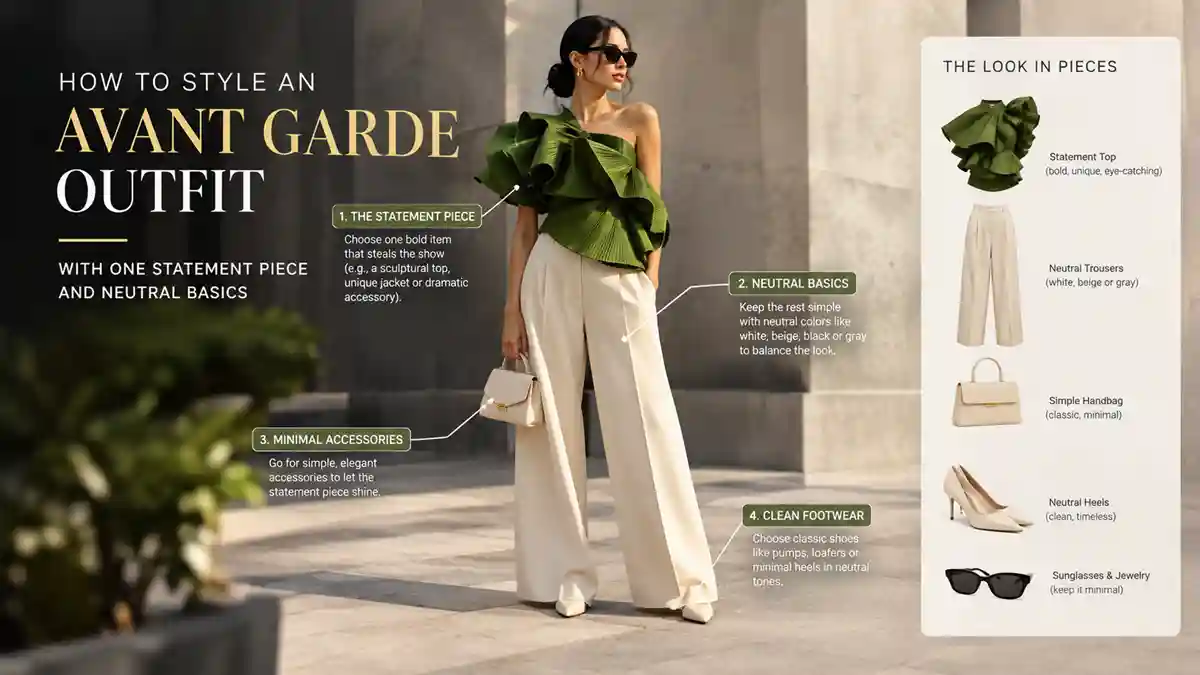
Avant garde is wearable if you adjust the dose. A practical approach
Common mistake Wearing several statement pieces at once. Each one competes with the others and the outfit can look chaotic instead of intentional.
For women and men The approach is the same. Avant garde often ignores traditional gender categories and many designers show unisex or gender fluid pieces so choose by silhouette and fit rather than by label section.
Everyday vs occasion wear For daily life, try a deconstructed blazer or an asymmetrical top. For evening or events, sculptural dresses, dramatic outerwear and architectural accessories are more natural fits.
Avant Garde Fashion Trends
I could not verify current season runway data so this section covers enduring themes rather than this year’s trends. Sculptural volume and asymmetry recur across decades. Material innovation, such as digital fabrication, continues to be a major area of experimentation. Designers also increasingly discuss sustainable materials and production methods, though the extent varies widely by brand. For the latest collections, check current runway coverage from Paris, Milan and Tokyo.
Frequently Asked Questions
Conclusion
Avant garde fashion is less a trend than a mindset clothing as a way to question, provoke and express ideas. From Schiaparelli’s surrealism to Kawakubo’s deconstruction and van Herpen’s digital craft, it has repeatedly pushed the fashion industry to reconsider what clothing can be.
You do not need a runway wardrobe to engage with it. Start by exploring the designers above, study their collections and try one bold piece in your own style. Then keep exploring and let the ideas, not just the clothes, shape how you dress.