Black Abaya: Elegant Styles, Fabrics and Buying Guide
If you’ve ever stood in front of a rack of abayas wondering why nearly all of them are black or you’re trying to pick the right style for Umrah, work or everyday wear, you’re not alone. The black abaya is the most searched, most worn and most misunderstood piece of modest fashion. People want to know the meaning behind the color, which style suits them and how to keep it looking sharp wash after wash.
This guide answers all three. You’ll learn why black became the standard color for abayas, the most popular styles available today (from plain and embroidered to open front and kimono cuts), how to style a black abaya for different occasions and what to look for before you buy.
Quick Answer
A black abaya is a full length, loose fitting outer garment traditionally worn by Muslim women for modesty. Black became the standard color because it doesn’t show dirt easily, symbolizes modesty and simplicity and creates a uniform, non attention drawing look. Today it comes in many styles: plain, embroidered, open front, kimono and embellished with gold or lace suited for daily wear, work, travel or Umrah.
What Is a Black Abaya?
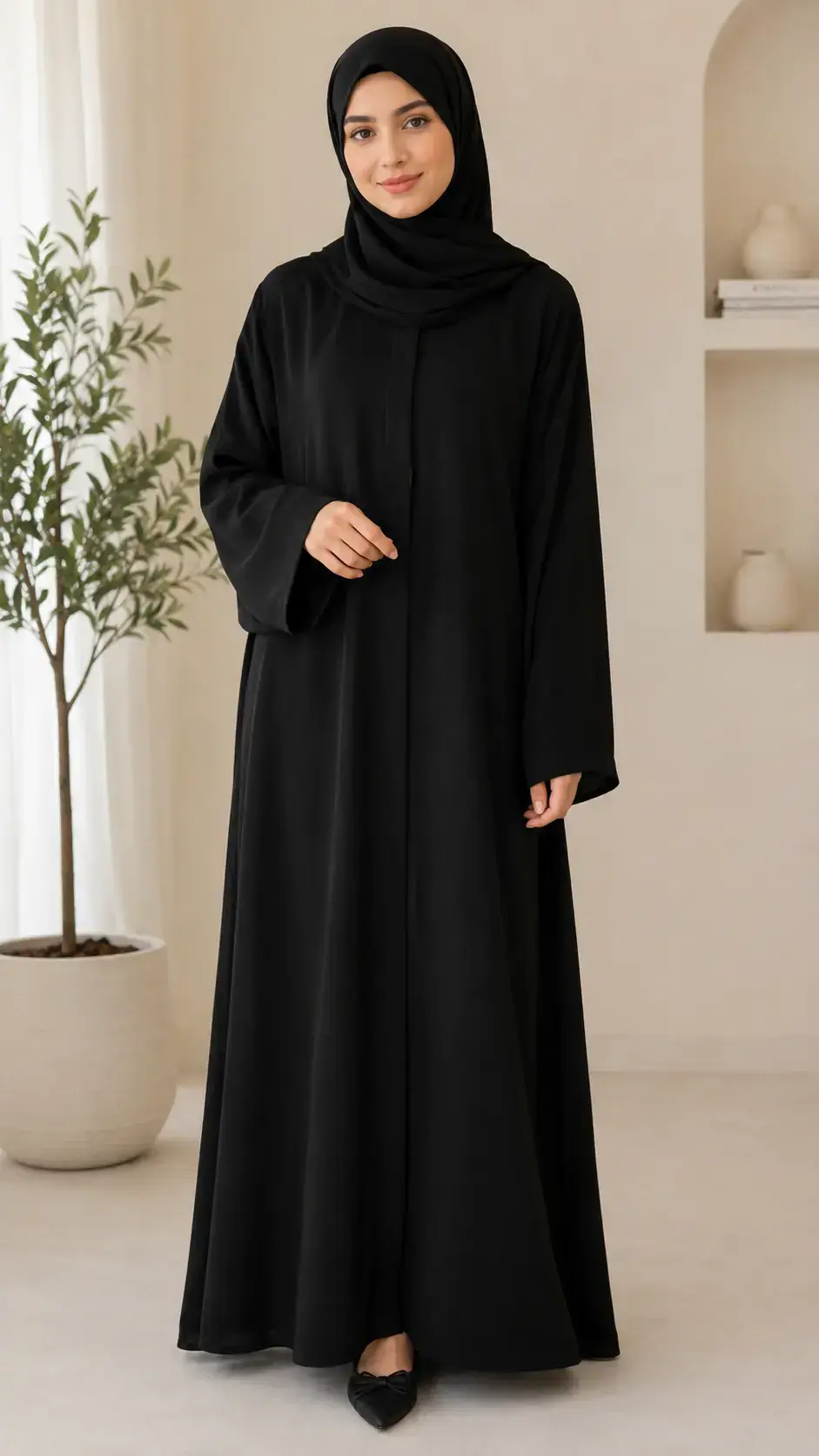
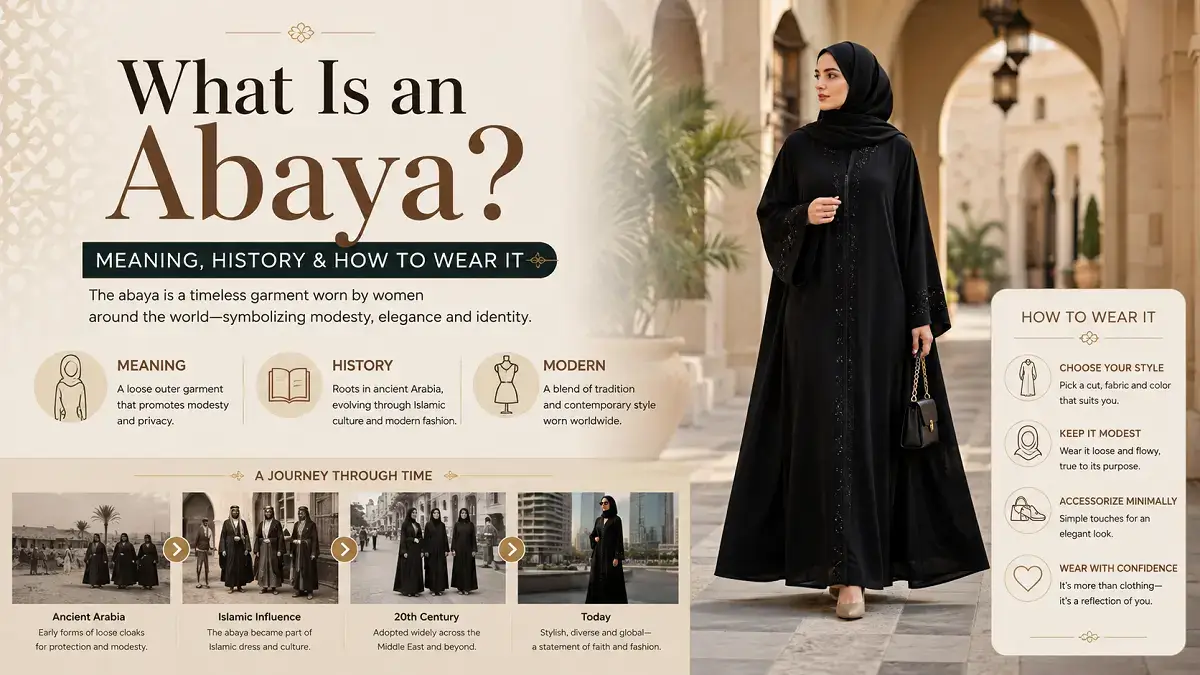
An abaya is a loose, robe-like garment that covers the body from the shoulders to the ankles. It’s typically worn over regular clothing as an outer layer and is most associated with the Gulf region, including Saudi Arabia and the UAE, though it’s worn by Muslim women worldwide.
The black abaya specifically refers to the classic, most widely available color version. It’s considered the default or “traditional” abaya, distinct from colored or printed versions that have become more common in recent years.
Key features of a black abaya:
- Full length, floor grazing hem
- Loose, non form fitting cut
- Long sleeves (though open sleeve and kimono variations exist)
- Front or side closure (button, zip or open drape)
- Often paired with a matching hijab or headscarf
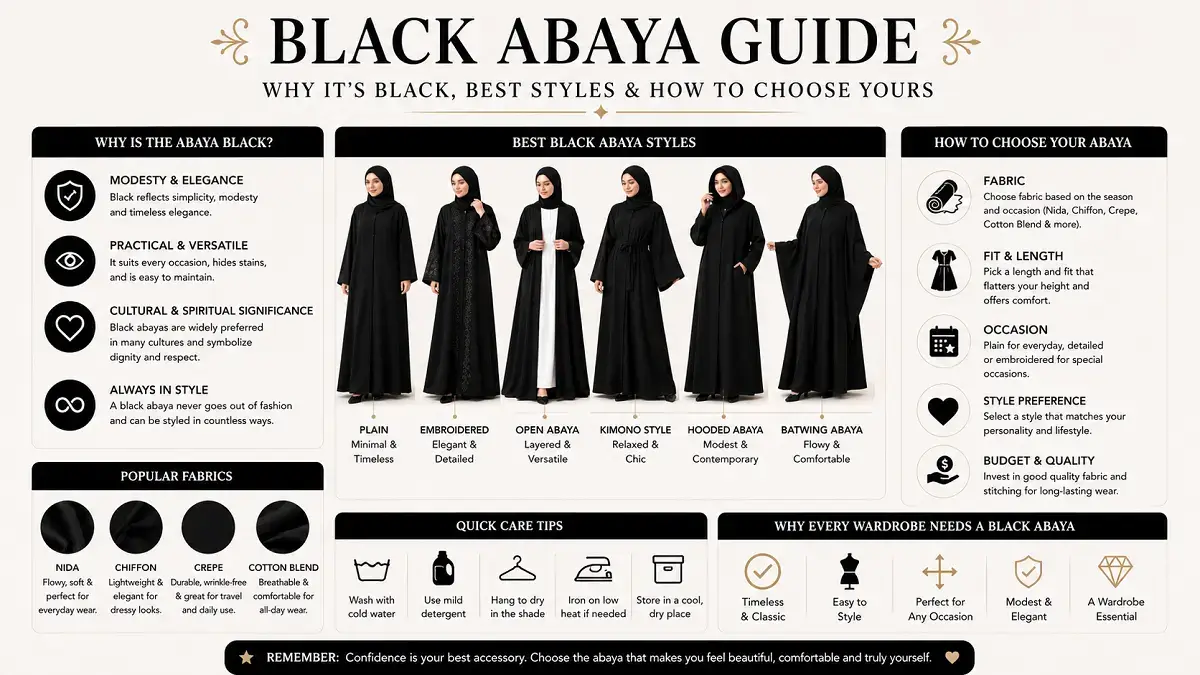
Why Is the Abaya Black?
This is one of the most common questions searchers ask and the honest answer is that it’s part tradition, part practicality not a religious requirement written in scripture.
Reasons the abaya is traditionally black:
- Modesty and non attraction: Islamic guidelines on dress emphasize modesty and avoiding clothing that draws excessive attention. A uniform dark color supports that goal.
- Cultural convention, not religious mandate: Islam requires modest covering but it does not specify a color. Black became customary in Gulf countries over generations and stuck as the cultural norm similar to how black became the default color for Western formalwear.
- Practicality: Black doesn’t show dust, dirt or stains as easily, which matters in hot, sandy climates like the Arabian Peninsula.
- Uniformity and equality: A shared, understated color reduces visible markers of wealth or status between women.
Important distinction: Because color isn’t a religious requirement, abayas today come in navy, beige, grey and printed variations too. Black simply remains the most traditional and most searched for option.
Popular Black Abaya Styles
Not all black abayas look the same. Here’s a breakdown of the styles people search for most, so you can match one to your taste and occasion.
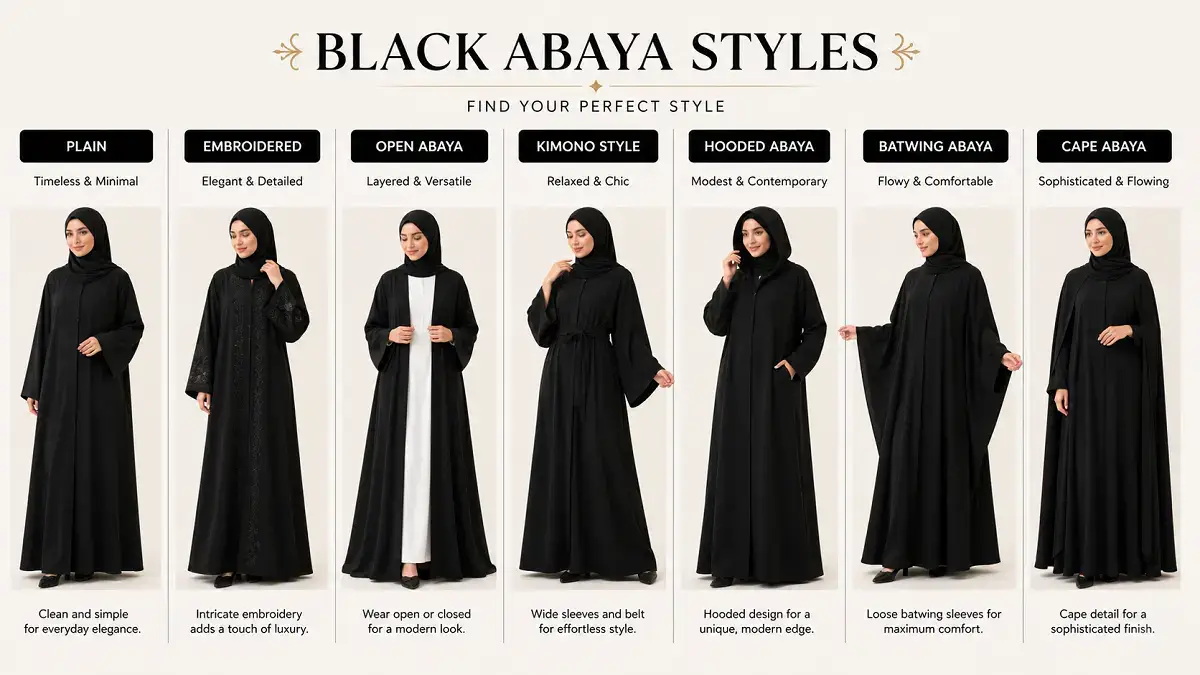
| Style | Description | Best For |
|---|---|---|
| Plain black abaya | No embellishment, clean lines | Work, daily wear, Umrah |
| Black embroidered abaya | Thread embroidery on sleeves, hem or front panel | Special occasions, gifting |
| Black and gold abaya | Gold trim, thread or embellishment against black | Eid, weddings, evening events |
| Black open abaya | Worn open like a duster over an outfit | Layering over jeans/dresses |
| Black kimono abaya | Wide, flowing kimono style sleeves and open front | Casual, modern styling |
| Black lace abaya | Lace panels or trim, often on sleeves or hem | Evening wear, layering |
| Black hooded abaya | Built in hood for extra coverage | Travel, colder climates |
| Black butterfly abaya | Wide, cape like sleeve silhouette | Statement, photo friendly outfits |
| Black shimmer abaya | Subtle metallic or shimmer thread woven in | Evening or festive occasions |
| A line black abaya | Slightly flared cut from the shoulders down | Umrah, comfortable all day wear |
A Note on Fabric
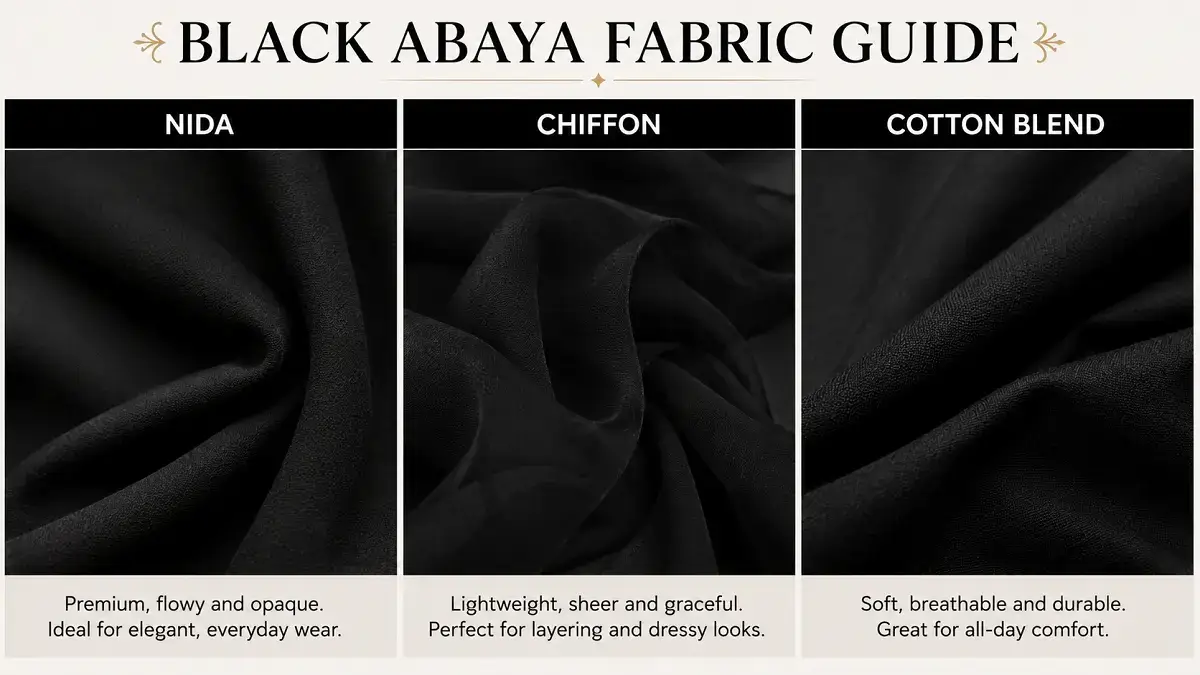
Black abaya fabric matters as much as the style. Common choices include:
- Nida/Crepe lightweight, drapes well, doesn’t cling
- Chiffon flowy but usually needs an underlayer
- Cotton blends breathable, good for hot climates
- Satin/silk blend used for shimmer or evening abayas
If you’re buying for Umrah or daily prayer, prioritize breathable, non see through fabric like nida or a good cotton blend over silk or sheer chiffon.
How to Style a Black Abaya
A black abaya is versatile because it acts like a neutral canvas. A few practical styling ideas:
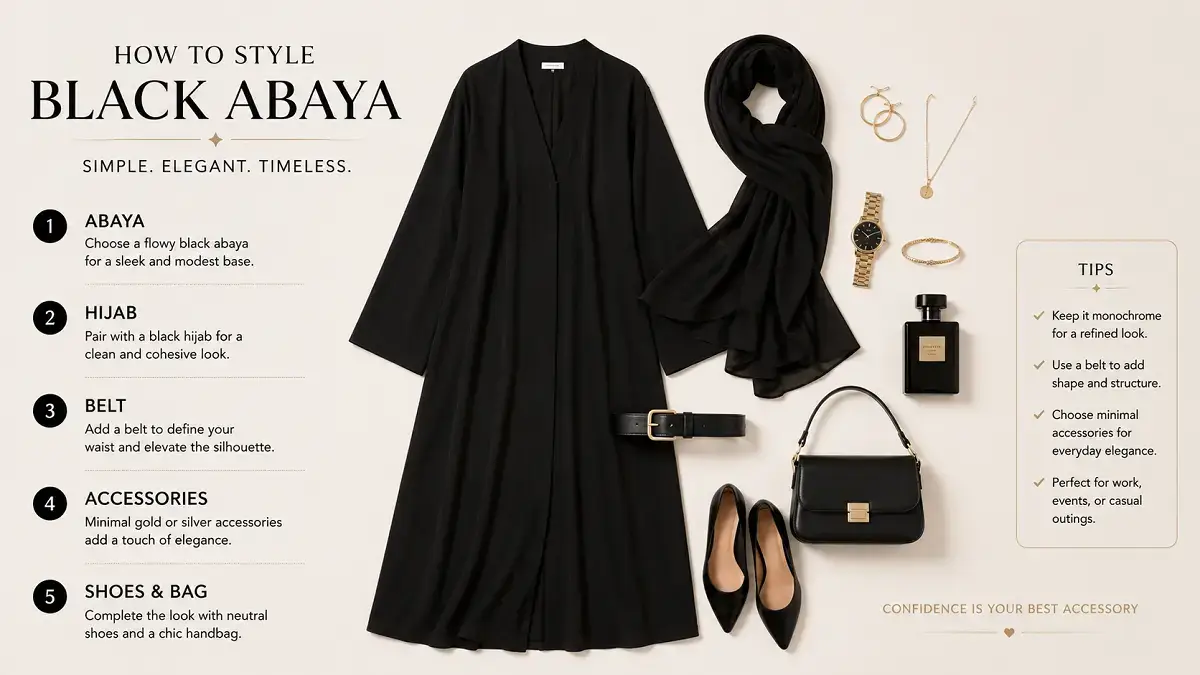
- Add color through your hijab: Pair a plain black abaya with a jewel toned or patterned hijab to avoid an all black look feeling flat.
- Use a belt: A thin belt at the waist on an open front abaya adds shape without compromising the loose silhouette.
- Layer for structure: Open front and kimono abayas layer well over a simple dress or wide leg trousers underneath.
- Match embellishment level to occasion: Save gold, rhinestone or heavily embroidered abayas for events; keep plain or lightly detailed abayas for daily and work wear.
- Footwear matters: Simple flats or heels in black, nude or gold keep the look cohesive; busy or bright shoes tend to clash with the floor length silhouette.
How to Wash and Care for a Black Abaya
Keeping black fabric from fading is the main concern most owners have.
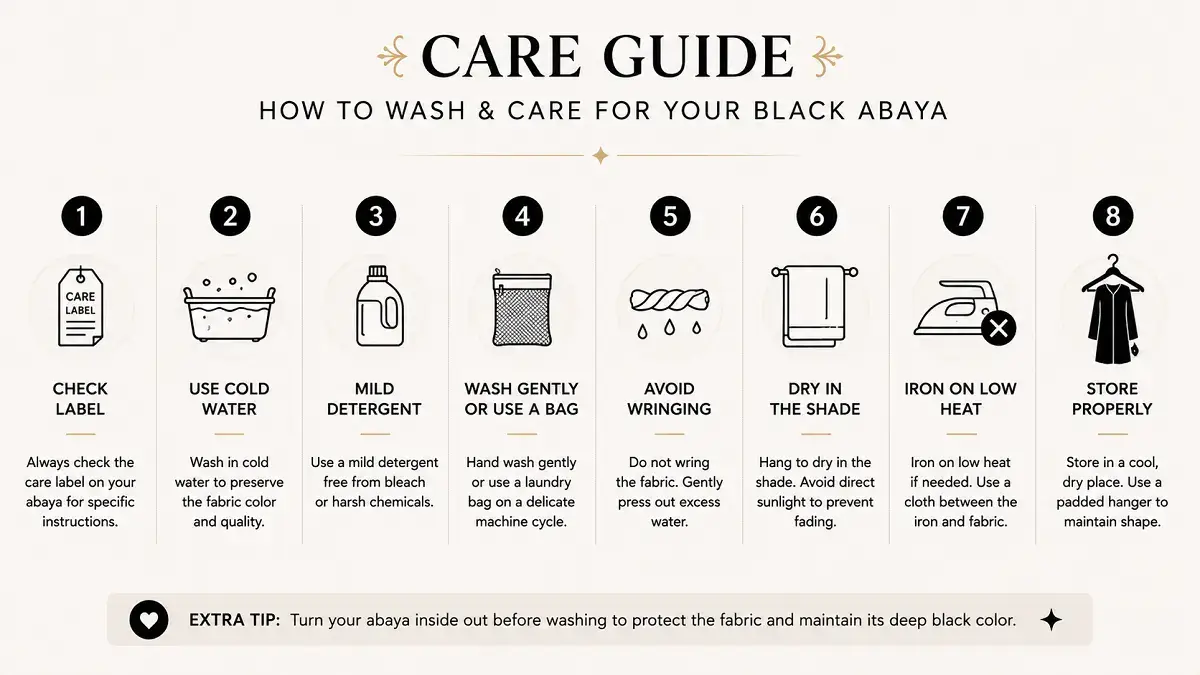
- Check the care label first fabric blend determines whether machine or hand wash is safe.
- Turn it inside out before washing to reduce surface friction and fading.
- Use cold water and a mild, color safe detergent.
- Avoid harsh spin cycles for chiffon, lace or embellished abayas hand wash or use a gentle/delicate cycle instead.
- Skip the tumble dryer. Air dry on a hanger to preserve shape and prevent shrinkage.
- Iron on low heat or steam instead, especially over embroidery, gold thread or rhinestone detailing, which can melt or loosen under direct high heat.
Buying Guide: How to Choose the Right Black Abaya
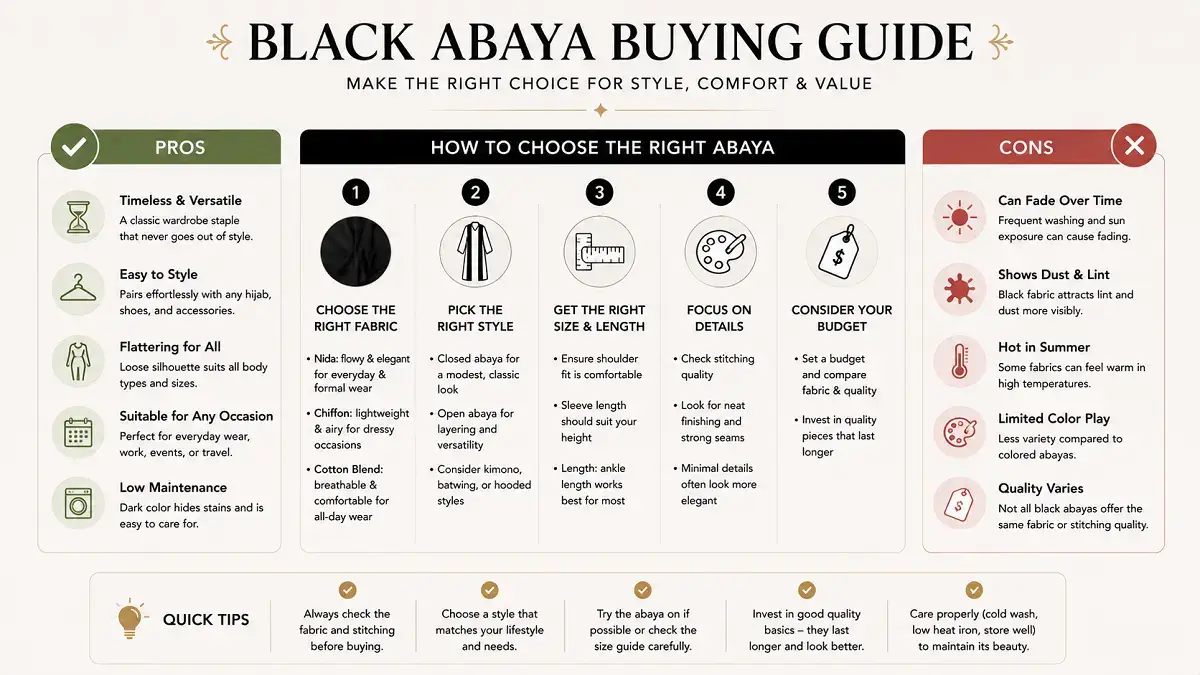
Pros and Cons of a Black Abaya
| Pros | Cons |
|---|---|
| Doesn’t show stains or dust easily | Can absorb more heat in direct sun |
| Pairs with any color hijab or accessory | All black styling can look flat without contrast |
| Widely available in every style and price point | Embellished versions need more careful washing |
| Timeless, traditional choice | Less variety in texture visibility compared to lighter colors |
Decision Guide
- Everyday wear or work: plain or a line black abaya in breathable fabric
- Umrah or prayer: plain, non sheer, comfortable nida or cotton blend abaya
- Special occasions: black and gold, embroidered or shimmer abaya
- Warm climates: lightweight nida or cotton, avoid heavy embellishment
- Layering over outfits: open front or kimono style abaya
Buying Tips
- Check fabric weight and opacity before buying online. Hold it up to light if possible.
- Confirm sizing charts carefully; abaya sizing varies more by brand than standard clothing.
- If ordering embellished styles, look for reinforced stitching around embroidery or rhinestones so detailing doesn’t come loose after a few washes.
- For Dubai or Saudi shoppers, local souks and modest fashion boutiques often let you try before buying, which is useful for fit and fabric feel.
Common Mistakes to Avoid
- Choosing sheer fabric without an underlayer is uncomfortable and defeats the modesty purpose.
- Ignoring sizing abayas that are too fitted lose the loose, comfortable silhouette they’re designed for.
- Over washing embellished pieces on a hot cycle is the fastest way to damage embroidery or gold thread.
- Assuming black is a religious requirement, it’s a cultural convention, so don’t feel restricted to it if another modest color suits you better.
Frequently Asked Questions (FAQs)
Conclusion
The black abaya remains the most popular and most searched modest wear choice because it combines tradition, practicality and versatility. Its color comes from cultural convention rather than religious mandate, which is why so many styles, plain, embroidered, open front, kimono, gold trimmed exist under the same “black abaya” umbrella today. Whether you’re shopping for daily wear, Umrah or a special occasion, matching the style and fabric to your purpose and caring for it properly, will keep it looking elegant for years.
If you’re exploring modest fashion further, take a look at our guides on choosing the right hijab styles to pair with an abaya or our seasonal abaya care and storage tips to keep every piece in your wardrobe looking its best.






Really helpful guide! I liked the tips on black abaya styles, fabrics and choosing the right one.