Farasha: Guide to Pakistan Formal Wear Brand and What the Name Means
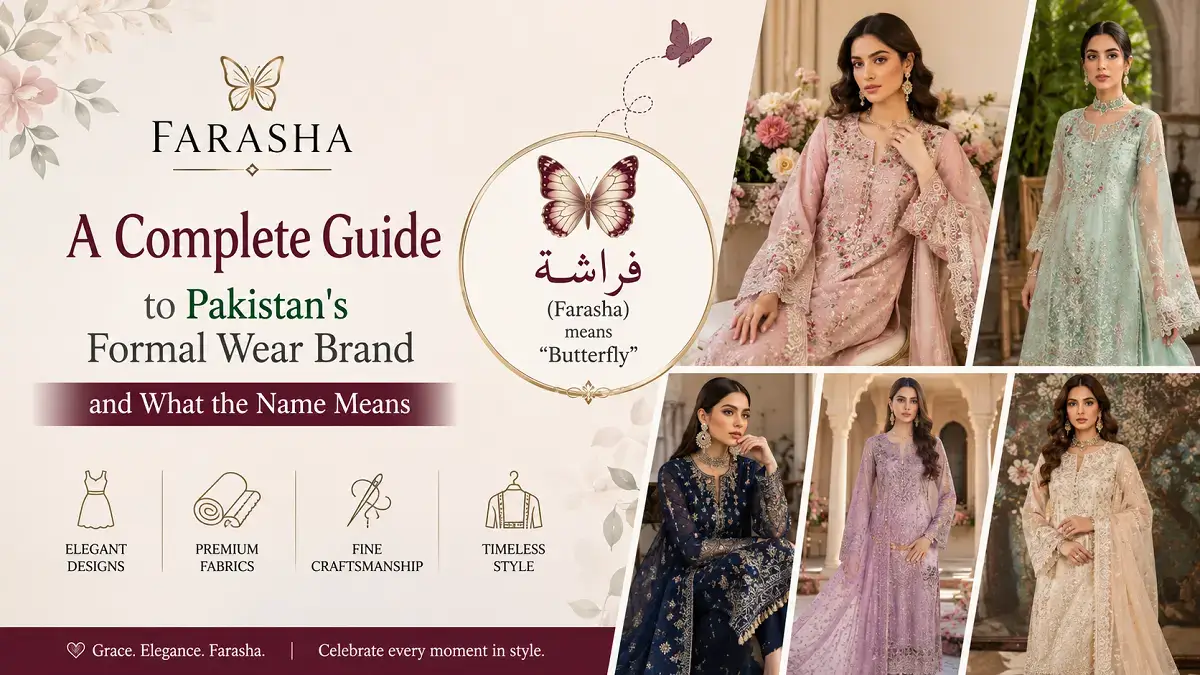
If you’ve searched “farasha” and landed here, you’re probably trying to do one of two things: find out about Farasha, the Pakistani formal-wear clothing brand or find out what the name Farasha means.
This guide covers both, along with what the brand actually sells, how its collections are structured and how to shop it online with confidence.
Quick Answer
Farasha is a Pakistani women’s clothing brand known for formal and semi-formal wear, including embroidered and printed lawn and chiffon suits, sold as unstitched fabric, stitched pieces or ready-to-wear.
The name Farasha is also an Arabic word meaning “butterfly,” often used as a feminine given name symbolizing beauty and transformation.
What Is Farasha?
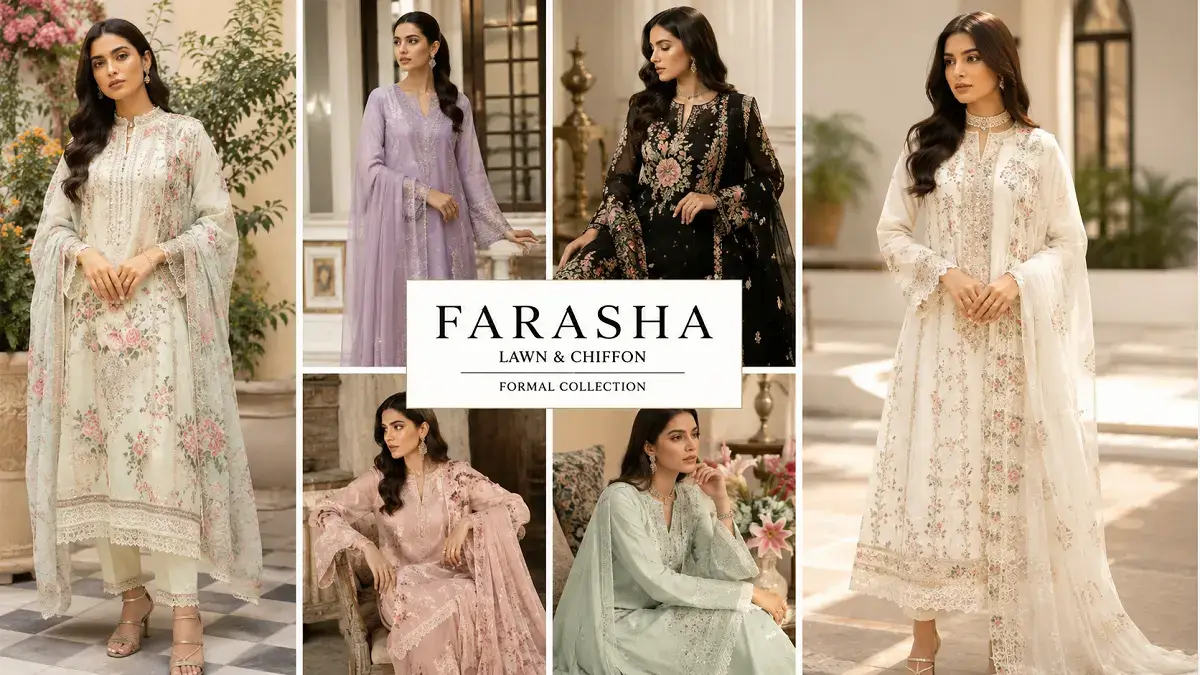
Farasha is a Pakistan-based women’s fashion label built around formal and semi-formal wear. The brand positions itself around quality fabric sourcing and detailed embroidery work, designing pieces for occasions like weddings, festive events and everyday elevated dressing.
Its core product lines are chiffon and lawn dresses, offered as embroidered and printed designs.
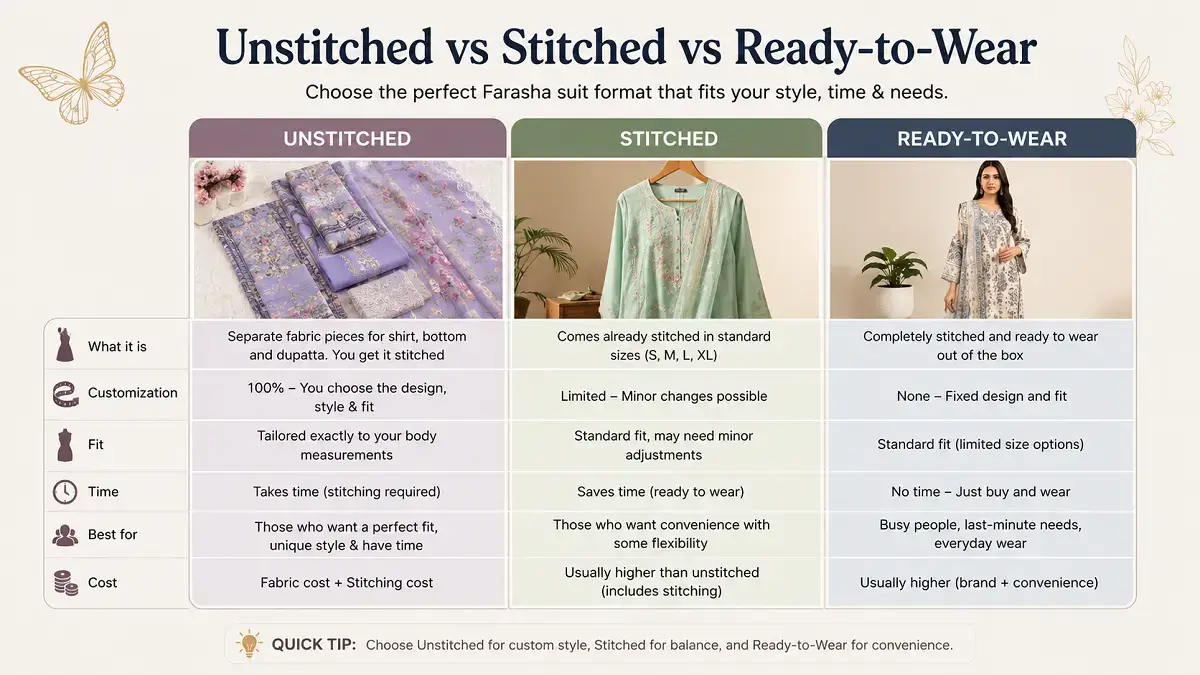
Customers can typically choose between three purchase formats:
- Unstitched suits fabric sold by the piece (usually 2 or 3-piece sets) for custom tailoring
- Stitched suits pre-sewn to standard sizing
- Ready-to-wear (pret) finished garments meant to be worn straight off the rack
This three-way format is standard across Pakistan’s premium unstitched-fashion market and it’s one of the first things to understand before shopping the brand, since pricing and fit expectations differ across each.
Sapphire Pakistan: Complete Guide to Collections, Sales and Online Shopping
The Meaning Behind the Name Farasha
Separately from the clothing brand, “Farasha” is an Arabic word and given name meaning “butterfly.” It comes from an Arabic root associated with insects with wings and in Urdu it’s commonly translated as تتلی (butterfly) or described as “beautiful.”
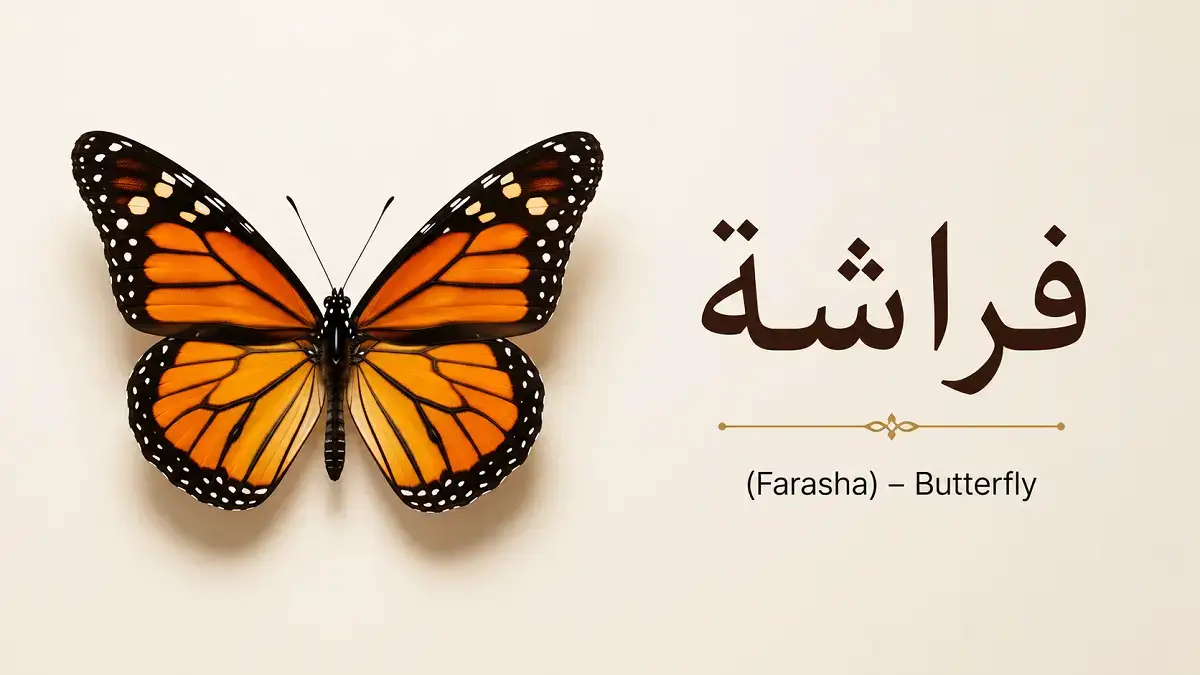
The word carries symbolic weight in Arabic culture and literature, where the butterfly represents renewal, fragility and transformation. It also appears in a related form in the Quran (Surah Al-Qari’ah), where humanity is poetically compared to “scattered moths/butterflies” a well-known literary reference that has kept the imagery culturally resonant.
This dual identity a poetic Arabic word and a modern Pakistani fashion label is likely why “farasha” is such a frequently searched term: some users want the brand, others want the name meaning and a smaller group is searching for generic “farasha-style” abayas and kaftans sold internationally (a different, unrelated open-front abaya style popular in Gulf and UK markets, not the Pakistani formal-wear brand covered in this guide).
Farasha’s Collections and Style
Farasha’s collections generally fall into a few recurring categories, refreshed seasonally:
- Lawn collections lightweight cotton-based fabric suited to warm-weather formal and casual-formal wear, typically released for spring/summer.
- Chiffon and formal collections heavier, more embellished pieces designed for weddings and festive events, often featuring embroidery, stonework or digital prints.
- Ready-to-wear (pret) finished pieces for buyers who want to skip tailoring altogether.
- Chikankari and Eid-focused capsules occasion-specific collections timed around Eid and wedding season, a common release pattern among Pakistani formal-wear labels.
Reviewers commonly describe the brand’s chiffon pieces as well-embroidered and true to size, with online retailers noting the brand’s sizing guidance and, in some cases, video sizing consultations for custom orders a detail worth checking for before buying formalwear online, since fit issues are the most common complaint with unstitched and semi-custom fashion.
Cougar Clothing | Guide to Shopping the Brand Online and In-Store
How to Shop Farasha Online in Pakistan
Farasha sells directly through its own website and its pieces are also stocked by several Pakistani and international fashion resellers that specialize in curated designer-brand marketplaces.
A few practical buying tips:
- Check the collection name and season like most Pakistani formal-wear brands, releases named seasonal collections (e.g., lawn, festive or wedding capsules). Prices and availability shift each season, so confirm current stock and pricing directly on the retailer’s page rather than relying on older listings.
- Confirm the purchase format before ordering unstitched fabric, stitched or ready-to-wear since sizing expectations and delivery timelines differ.
- Buy from the official site or a verified reseller to avoid counterfeit prints, which are common with popular Pakistani lawn and chiffon brands during peak wedding and Eid seasons.
- Review the shipping and return policy first Many Pakistani formal-wear brands offer domestic shipping with limited international shipping thresholds and formalwear returns are often restricted due to embellishment or tailoring, so it pays to check before ordering, especially for wedding-timeline purchases.
How to Tell Authentic Farasha Pieces From Look-Alikes
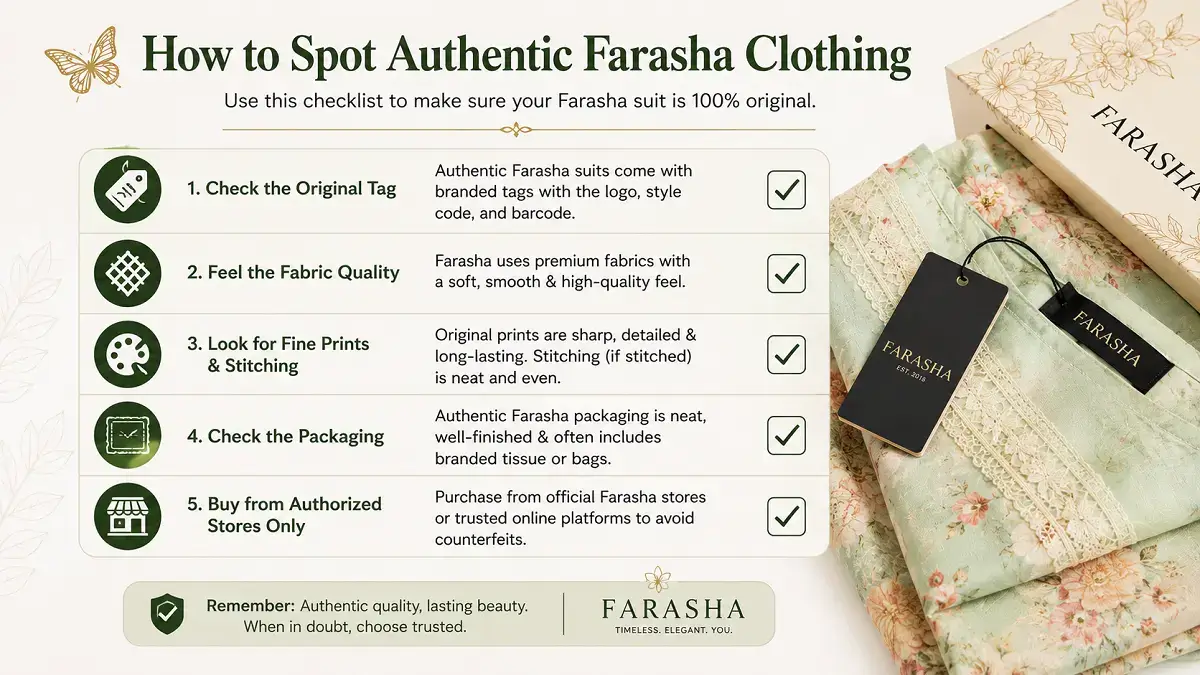
Because is also used generically overseas for a specific open-front abaya style and because Pakistani lawn/chiffon brands are frequently counterfeited, a quick authenticity checklist helps:
- Buy from the brand’s official website or a retailer that explicitly states it stocks 100% authentic, licensed stock.
- Compare embroidery and print quality against official brand photography counterfeit prints often use flatter colors and looser stitching.
- Check for a proper size guide and clear fabric composition (e.g., lawn vs. chiffon vs. nidha) on the product listing.
- Be cautious of listings that use only as a generic style descriptor (common on international marketplaces for open kaftans/abayas) rather than as the brand name; these are a different product entirely.
Frequently Asked Questions
Conclusion
Whether you came here to understand the name’s meaning or to learn about the Pakistani clothing brand, the core takeaway is this: Farasha means “butterfly” in Arabic and Farasha the brand is a Pakistan-based formal-wear label known for its lawn and chiffon collections.
If you’re ready to shop, confirm the current seasonal collection, choose your preferred purchase format (unstitched, stitched or ready-to-wear) and buy through the official site or a verified reseller to ensure authenticity especially if you’re buying for a wedding or Eid timeline where fit and delivery windows matter most.
Nishat Linen Sale: How to Find the Best Nishat Sale Deals in Pakistan