Top Pakistani Fashion Brands You Should Know in 2026
Pakistan’s fashion industry has grown from a handful of family-run textile mills into a market that exports embroidery, lawn prints and bridal couture to shoppers in the UK, the UAE and North America.
If you’ve seen the term Pakistani fashion brand pop up while browsing for lawn suits, bridal wear or everyday kurtas, you’ve probably noticed there isn’t one single answer.
There are dozens of established names, each with its own history, price point and specialty.
This guide breaks down what actually makes a brand Pakistani fashion, profiles the names that consistently come up as the most recognized and explains how they differ so you can shop with more confidence whether you’re buying your first lawn suit or comparing luxury bridal labels.
Quick Answer
A Pakistani fashion brand is a clothing or textile label founded and headquartered in Pakistan, typically producing lawn, pret, unstitched or bridal wear rooted in South Asian craftsmanship.
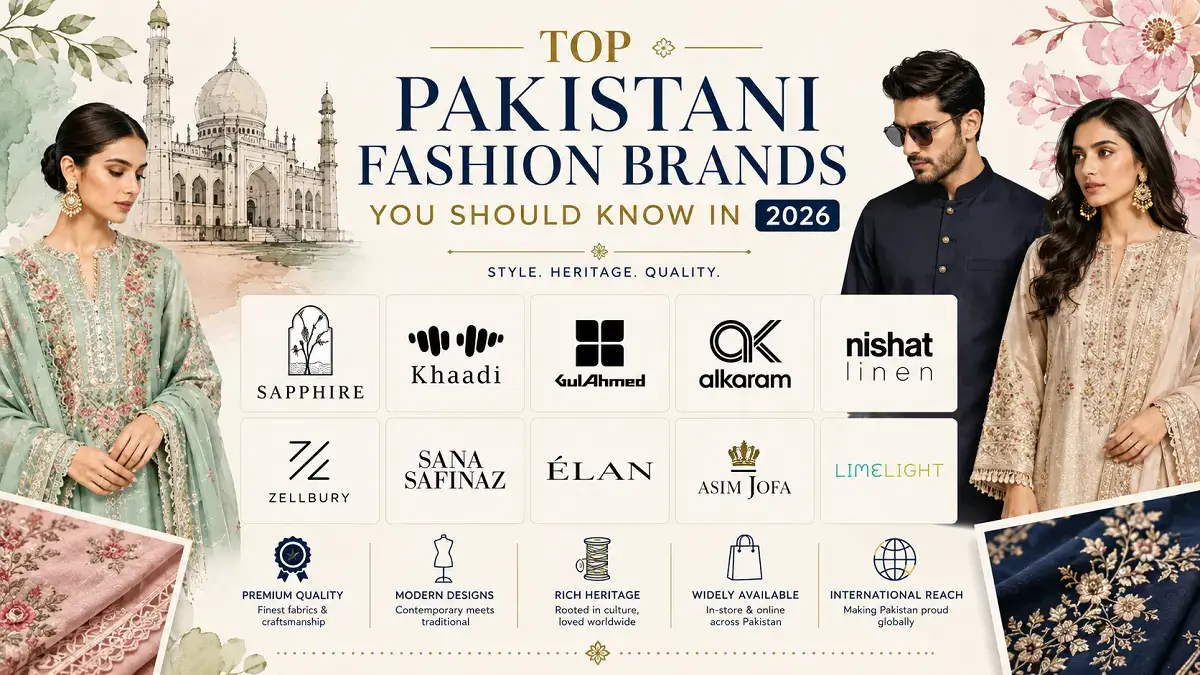
Leading names include Khaadi, Sana Safinaz, Sapphire, Gul Ahmed, Maria B and Alkaram Studio spanning everyday retail wear to high-end designer couture.
What Makes a Brand a Pakistani Fashion Brand?
A Pakistani fashion brand is a label that is founded, based and typically manufactured in Pakistan, drawing on the country’s textile heritage.
Two things distinguish most of these brands from generic clothing labels:
- Fabric and craft roots: Many Pakistani fashion brands grew directly out of textile manufacturing spinning, weaving and printing lawn, cambric and chiffon before branching into ready-to-wear retail. This gives them tighter control over fabric quality than pure retail-only labels.
- Embroidery and embellishment traditions: Techniques like zardozi (metallic thread embroidery) and gota (ribbon-style trim) are common across both everyday and bridal collections, blending traditional handwork with modern silhouettes.
Because of this, Pakistani fashion brands tend to fall into a few recognizable categories: mass-market retail (lawn and pret), designer/luxury couture, menswear and home textiles that share a parent company with the clothing line.
Top Pakistani Fashion Brands to Know
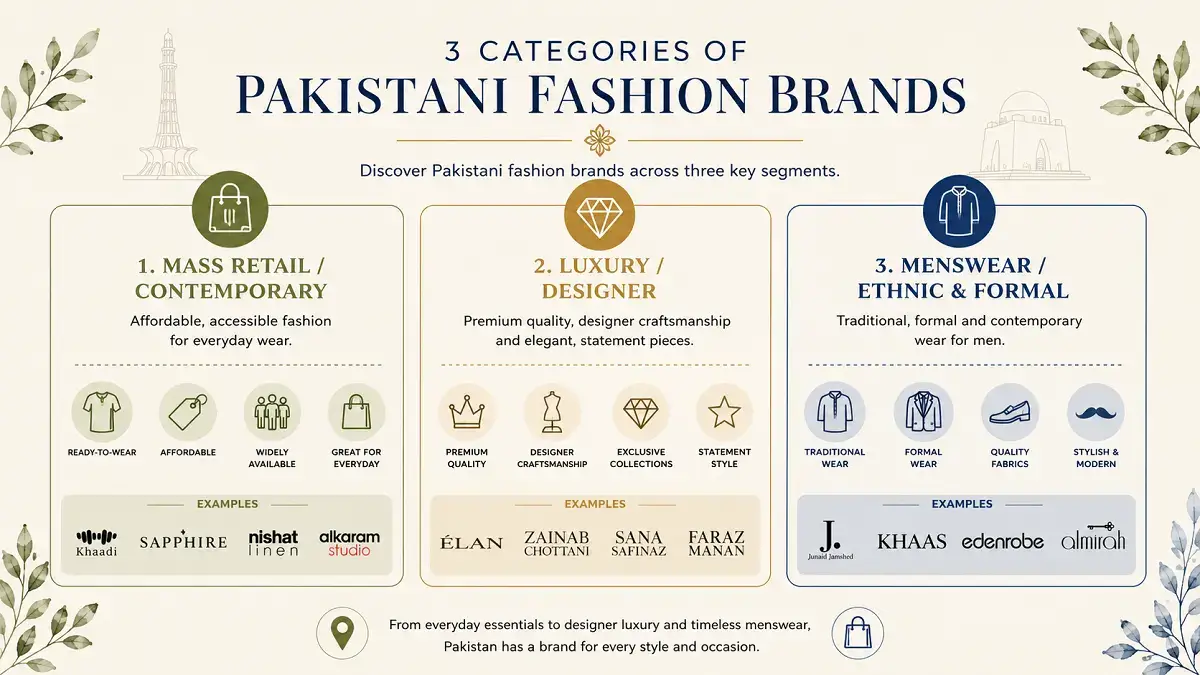
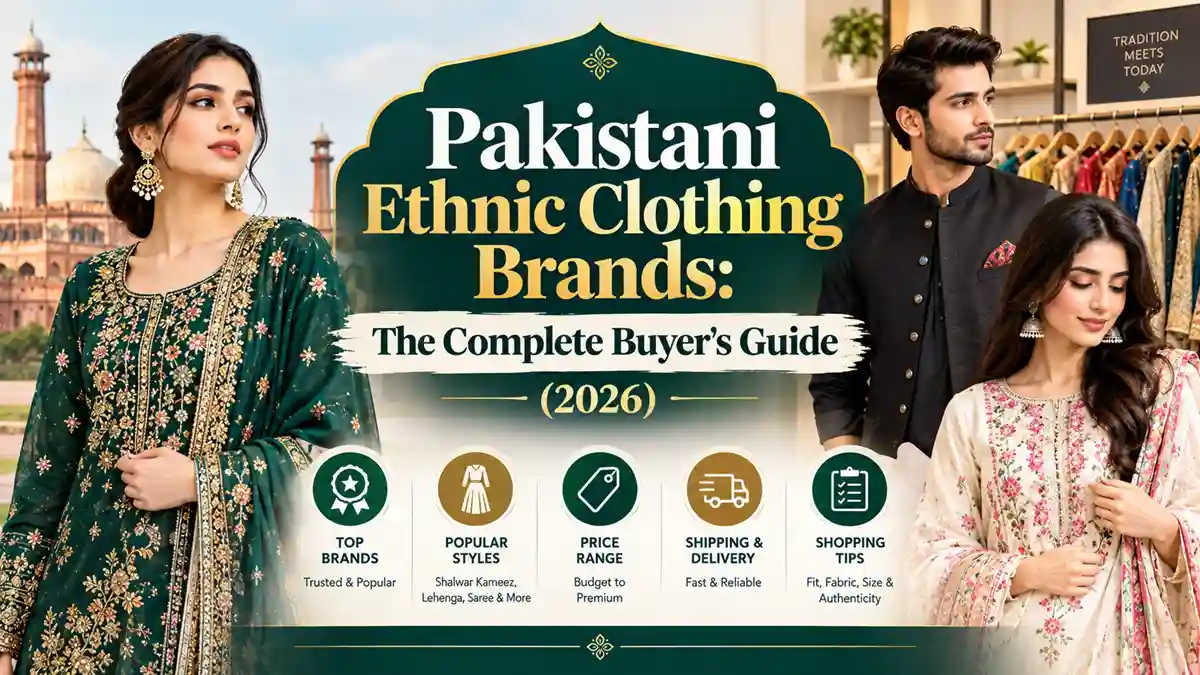
The table below covers the brands that come up most consistently across current rankings and industry coverage, along with what each is best known for.
| Brand | Headquarters | Category | Known For |
|---|---|---|---|
| Khaadi | Karachi (founded 1998) | Mass retail | Handwoven-inspired fabrics, everyday kurtas, ready-to-wear and unstitched lawn |
| Sana Safinaz | Karachi (founded 1989) | Luxury/designer | Bridal couture, luxury pret, seasonal lawn collections |
| Sapphire | Lahore | Mass retail | Affordable lawn and prêt, backed by Sapphire Textile mills |
| Gul Ahmed (Ideas by Gul Ahmed) | Karachi (textile mills est. 1953) | Mass retail + home textiles | Lawn suits, bedding and home textiles, long-running textile heritage |
| Alkaram Studio | Karachi | Mass retail + home textiles | Family clothing lines backed by Alkaram Textile Mills |
| Nishat Linen | Faisalabad/Lahore | Mass retail | Retail arm of Nishat Mills, one of Pakistan’s largest textile groups |
| Maria B | Lahore | Luxury/designer | Bridal gowns, luxury pret, statement embroidery |
| J. (Junaid Jamshed) | Karachi | Menswear + womenswear | Formal and semi-formal wear for men and women |
| Élan | Lahore | Luxury/designer | High-end hand-crafted bridal and couture |
| Limelight | Lahore | Mass retail | Embellished occasion wear, sequins and statement pieces |
| Bonanza Satrangi | Lahore | Mass retail | Colorful, affordable everyday and festive wear |
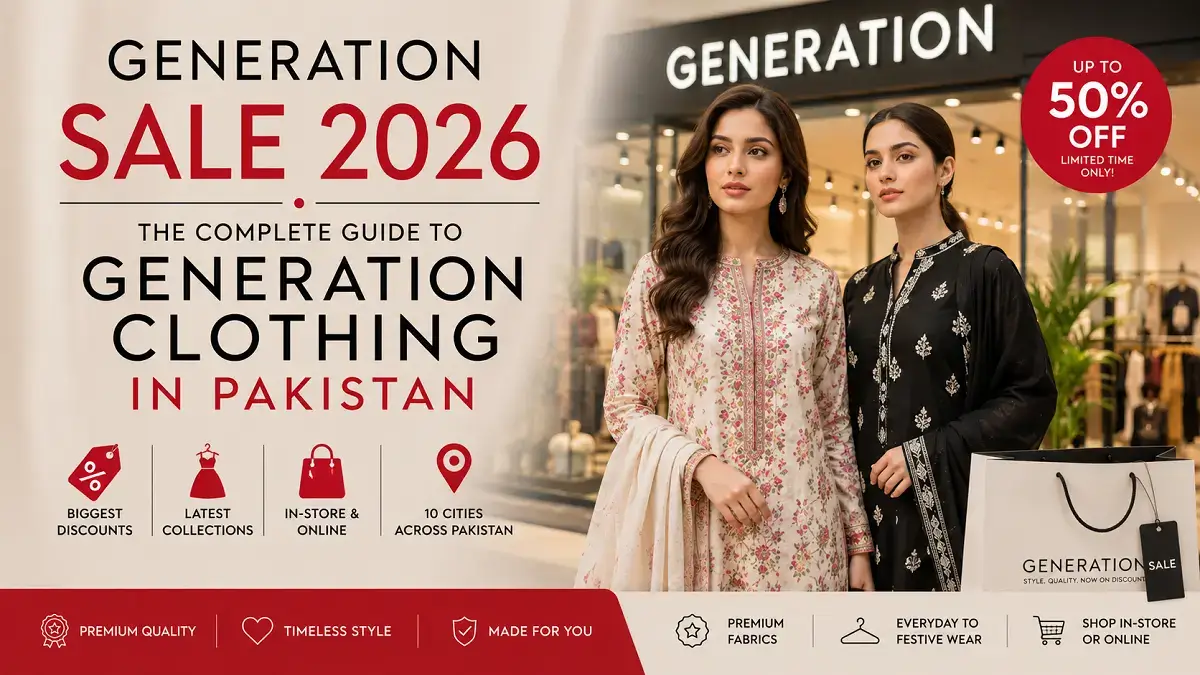
| Generation | Karachi | Mass retail | Youth-driven fusion styles blending heritage prints with modern cuts |
How to read this table: if you’re shopping on a budget for everyday wear, start with the mass-retail names (Khaadi, Sapphire, Bonanza Satrangi, Generation).
If you’re shopping for a wedding or a formal event, the luxury/designer names (Sana Safinaz, Maria B, Élan) are built around bridal and couture.
Menswear shoppers should look to J. and similar dedicated lines rather than womenswear-first labels.
Types of Pakistani Fashion Brands
Not every Pakistani fashion brand competes in the same space.
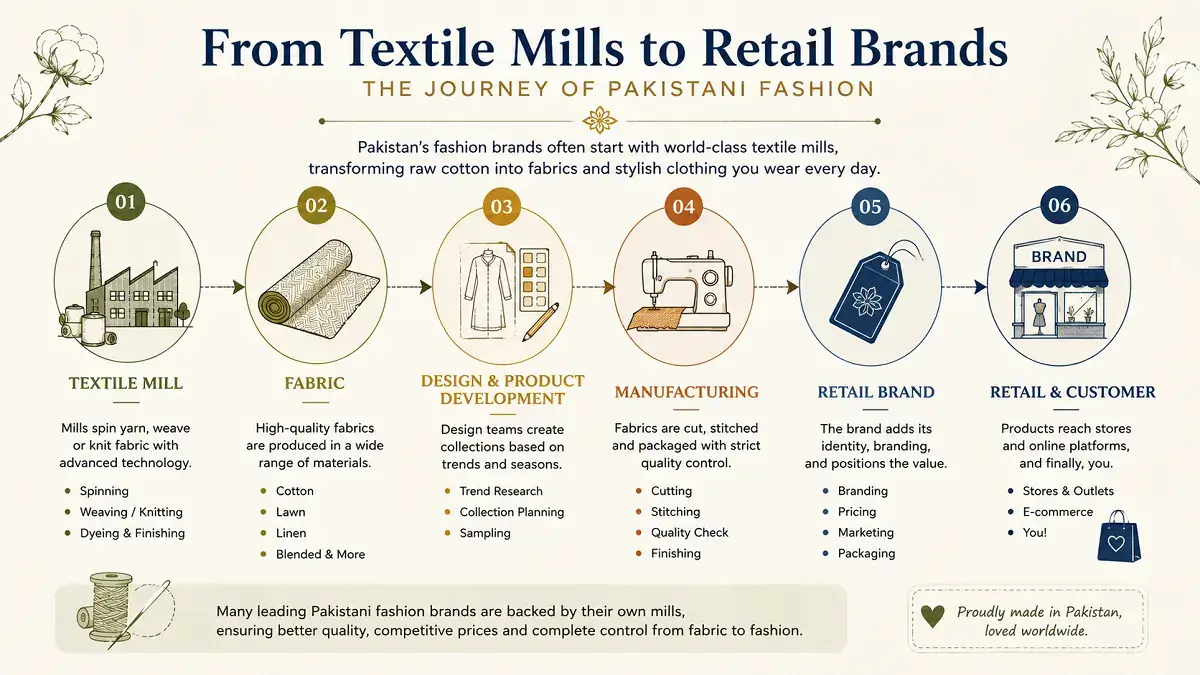
Understanding the categories makes comparison shopping much easier.
- Mass-market retail (lawn and pret): Brands like Khaadi, Sapphire and Gul Ahmed sell seasonal lawn collections and ready-to-wear pret at accessible price points, usually through large retail networks across Pakistan.
- Designer/luxury couture: Brands like Sana Safinaz, Maria B and Élan focus on bridal wear and high-end pret, with higher price points and more limited-run collections.
- Menswear-focused: Fewer brands specialize here but names like J. carry dedicated men’s formal and casual lines alongside their women’s collections.
- Textile-mill-backed retail: Gul Ahmed, Alkaram Studio and Nishat Linen are retail brands owned by long-established textile manufacturing groups, which is why they often carry home textiles (bedding, curtains) alongside clothing.
Pakistani Fashion Brands Going Global
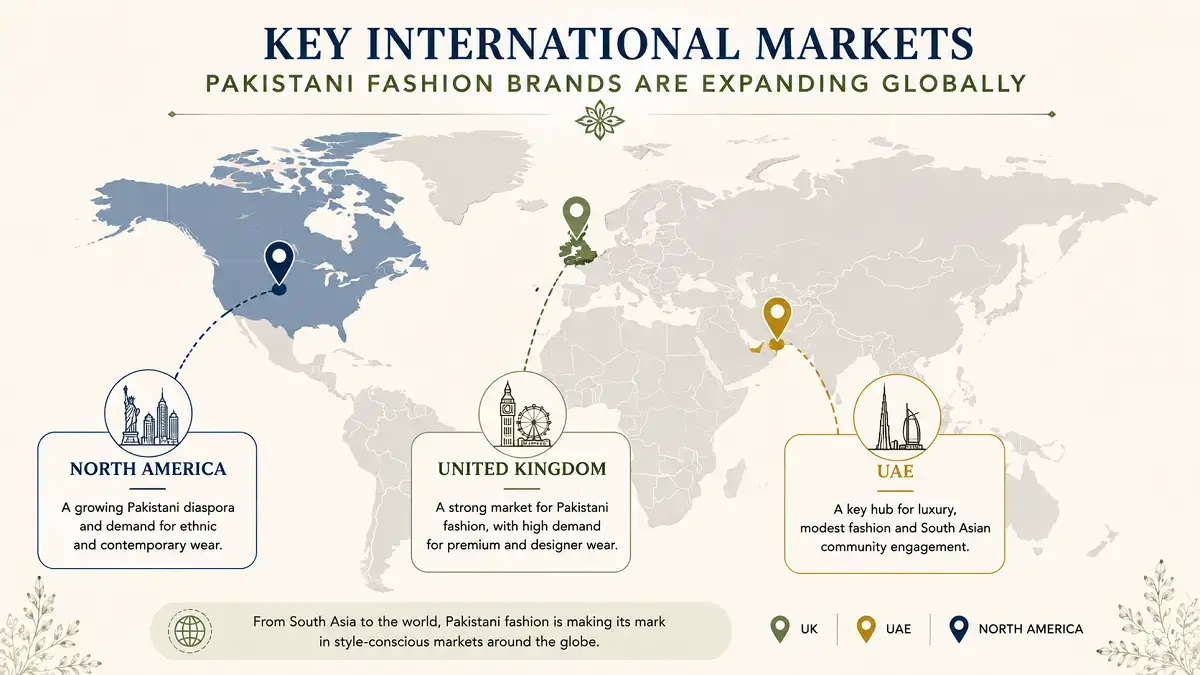
Several Pakistani fashion brands have expanded well beyond the domestic market, driven largely by demand from the Pakistani diaspora in the UK, UAE and North America.
Khaadi, for example, has opened stores across the UK and the Gulf Cooperation Council (GCC) region in addition to its Pakistan network.
Sapphire and Sana Safinaz have similarly built retail and e-commerce presence outside Pakistan and multiple luxury labels now ship internationally through their own websites even without physical stores abroad.
This international reach matters if you’re outside Pakistan and searching for a Pakistani fashion brand available in your city.
Brands with an established overseas retail footprint (rather than shipping-only websites) will generally offer more reliable sizing support, returns and after-sales service.
How to Choose the Right Pakistani Fashion Brand for You
With dozens of established names, narrowing down the right brand comes down to a few practical factors:
- Occasion: Everyday and casual wear points toward mass-retail brands; weddings and formal events point toward designer/luxury labels.
- Budget: Mass-retail lawn brands are significantly more affordable than couture houses, which often price bridal pieces well above ready-to-wear.
- Fit and sizing: Most Pakistani fashion brands are designed around South Asian sizing standards, check each brand’s specific size chart rather than assuming standard international sizing will match.
- Shipping and returns, if buying internationally: Brands with dedicated international stores or established shipping partners tend to offer smoother returns than smaller labels that ship internationally on a limited basis.
Mistakes to Avoid When Shopping Pakistani Fashion Brands
- Assuming all lawn collections are seasonal-only: Some brands re-release popular prints; check current-season labeling before assuming a piece is a one-time drop.
- Ignoring the size chart: Sizing conventions vary by brand and South Asian cuts don’t always map directly onto US/UK/EU size labels.
- Skipping fabric details on bridal purchases: Luxury and bridal pieces vary significantly in fabric weight and embroidery method (hand vs. machine); this affects both price and care requirements.
- Buying only by brand recognition: The most-followed brand on social media isn’t necessarily the best fit for your occasion or budget cross-check category (mass retail vs. designer) before deciding.
Frequently Asked Questions
Conclusion
The term Pakistani fashion brand covers a genuinely wide range from decades-old textile mills that expanded into retail, to designer houses built around bridal couture, to youth-focused labels blending heritage prints with modern cuts.
Rather than picking a name purely by social media popularity, match the brand category (mass retail, designer, menswear) to your occasion and budget and check sizing and shipping details if you’re buying internationally.
With that approach, you can shop any of the brands covered here with a clearer sense of what you’re actually getting.