20s fashion menswear essentials: jeans, chinos, Oxford shirt and white sneakers

20s Fashion Menswear: A Style Guide for Men in Their 20s

Your twenties bring a lot of change at once. You may go from campus to a first job, from weekend hangouts to date nights and from a tight budget to a bit more disposable income. Your clothes have to keep up with all of it.

Most guys respond in one of two ways. They buy a lot of trendy pieces that don’t work together or they wear the same hoodie and jeans every day. Neither gives you a wardrobe that works.

This guide to 20s fashion menswear shows you which pieces to own, how they should fit, how to combine them and how to do it without overspending. It covers casual, smart casual and occasion outfits, plus seasonal and care advice.
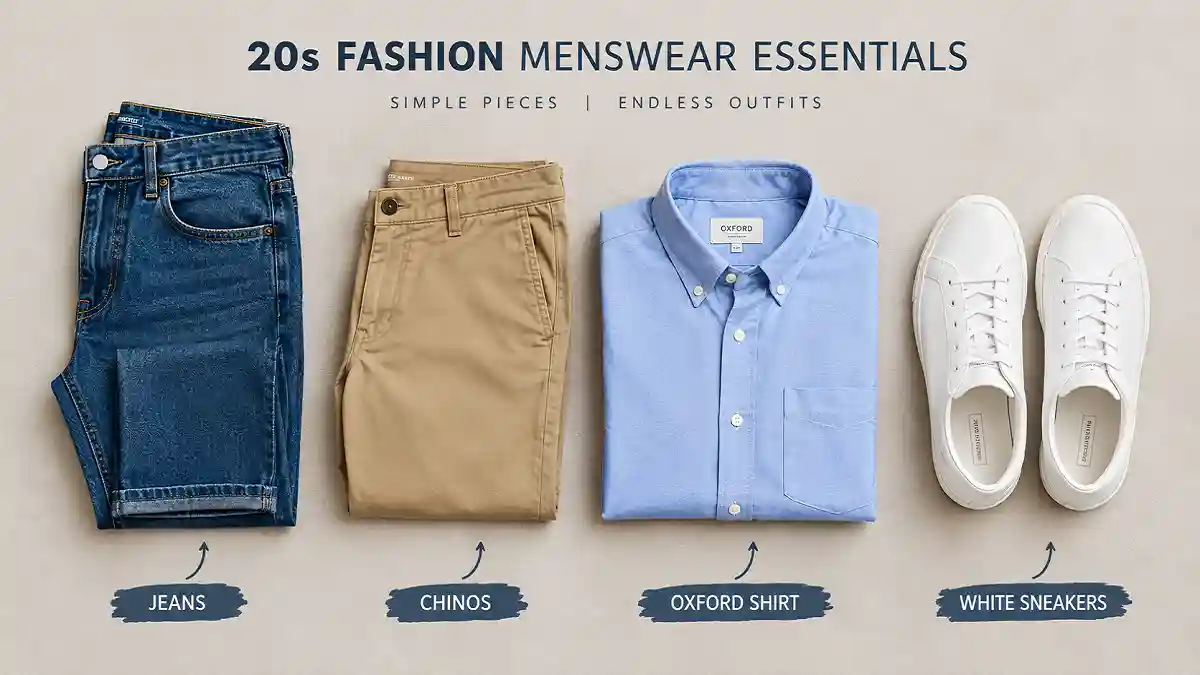
20s fashion menswear essentials: jeans, chinos, Oxford shirt and white sneakers

Quick Answer: What Should a Man Wear in His 20s?

20s fashion menswear is built on well fitting basics, not constant trend buying. Start with dark jeans, chinos, white sneakers, Oxford shirts, plain tees, a versatile jacket and a simple watch. Choose clean fits, neutral colors and quality fabrics you can mix into many outfits, then add trend pieces gradually as your personal style develops.

The Core Principle: Fit and Versatility Beat Trends

Fit changes how a $30 shirt and a $200 shirt look more than price does. A well fitting basic looks deliberate, while an oversized or too tight item looks accidental. Versatility matters just as much. If a piece goes with at least three other items you own, it is a good buy. If it only works with one outfit it is a risk.

This is also why a capsule wardrobe suits men in their 20s. A capsule wardrobe is a small set of mix and match pieces in a limited color palette. It reduces decision fatigue and cost and it makes shopping easier because you buy to fill gaps.

Essential Wardrobe Pieces for Men in Their 20s

These items cover most situations. You do not need all of them at once.
  • Dark jeans (indigo or black): They work for casual outfits, date nights and relaxed offices. Wear them with a tee, a shirt or knitwear.
  • Chinos (navy, olive, stone): They are the bridge between jeans and dress trousers. Chinos are the base of most smart casual outfits.
  • White or off white sneakers: They go with nearly everything and give a clean look. Keep them clean, because dirty white sneakers undo the effect.
  • Oxford shirt: It works untucked with jeans or tucked in with chinos. It is durable and easy to dress up or down.
  • Plain tees (white, grey, navy, black): They are the base layer for most outfits. Choose thick, tightly woven cotton that keeps its shape.
  • Knitwear (crewneck or quarter zip): It adds polish over a shirt and works as a standalone layer.
  • A versatile jacket: A bomber, denim jacket or simple leather jacket suits most casual outfits. Choose one based on your climate and style.
  • Loafers or leather boots: One pair of smarter shoes lets you move from casual to formal without buying a full set of dress shoes.
  • A simple watch and belt: Accessories finish an outfit. Match your belt to your shoes where practical.
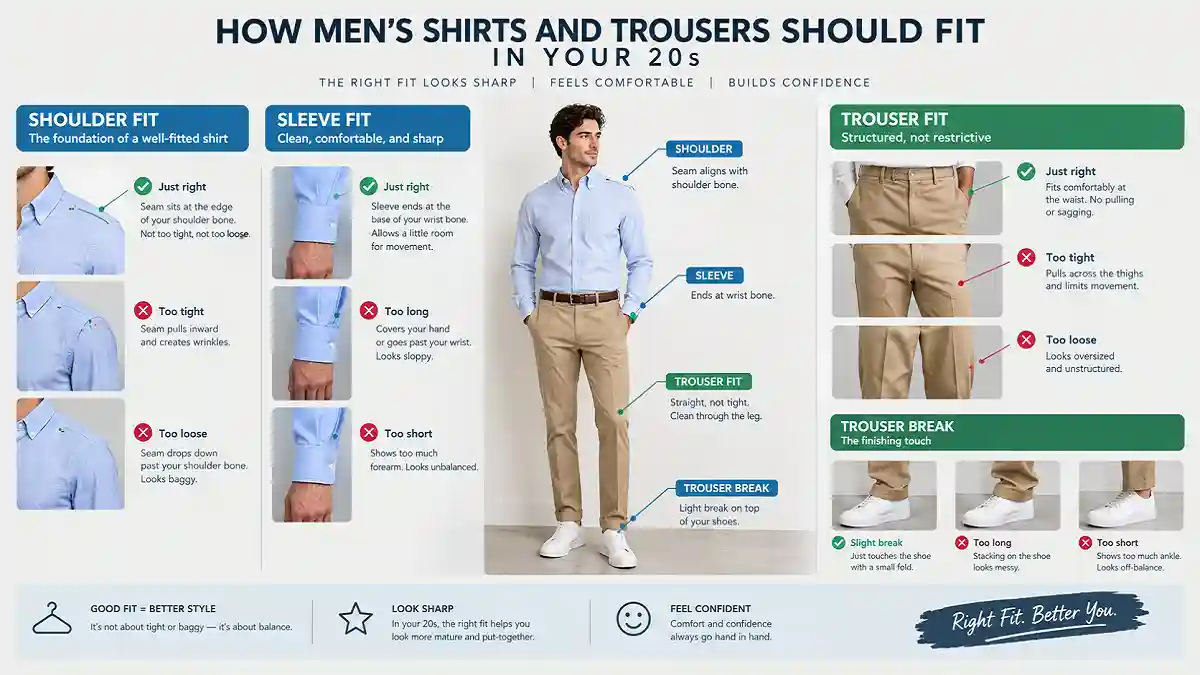
How men’s shirts and trousers should fit in your 20s

How Clothes Should Fit

Use these general guidelines. Bodies and preferences vary so adjust them to your frame.

  • Shirts: Shoulder seams should sit at the edge of your shoulders. Sleeves should end near the wrist bone and the shirt should not pull across the chest or billow at the waist.
  • Jeans and trousers: They should sit comfortably at the waist without a belt cutting in. Choose a slim or straight cut with a small break at the ankle and avoid fabric bunching over your shoes. Relaxed and tapered fits are also valid if they suit your build.
  • Jackets: The shoulders should fit without pulling and you should be able to layer a thin knit underneath.
  • Tailoring: A local tailor can hem trousers or take in a shirt for a small cost. This is often the cheapest way to make a budget garment look expensive.
  • Dressing for your body type: If you are broader, choose structured fabrics and avoid very clingy knits. If you are slim, textured knits and layers add visual weight. If you are shorter, keep outfits tonally similar and avoid cuffs that stack up. These are guidelines, not rules.

Casual vs Smart Casual vs Streetwear

Many men mix these categories up so here is a clear distinction.

StyleCore piecesBest forKey rule
CasualTee, jeans, sneakers, hoodieWeekends, errands, hanging outKeep fits clean and clothes fresh
Smart casualOxford shirt, chinos, knitwear, loafers or clean sneakersDate nights, office, dinnersAdd one polished piece to a casual base
StreetwearOversized tees, cargo or wide leg pants, bold sneakers, graphic piecesSocial settings, creative environmentsBalance volume: oversized on top, slimmer below or the reverse
MinimalistNeutral colors, plain fabrics, few logosEveryday wear, workRely on fit and texture, not pattern

Streetwear differs from casual menswear mostly in silhouette and branding. Casual wear is practical and understated, while streetwear uses volume, graphics and sneaker culture as statements. Both can work in your wardrobe.
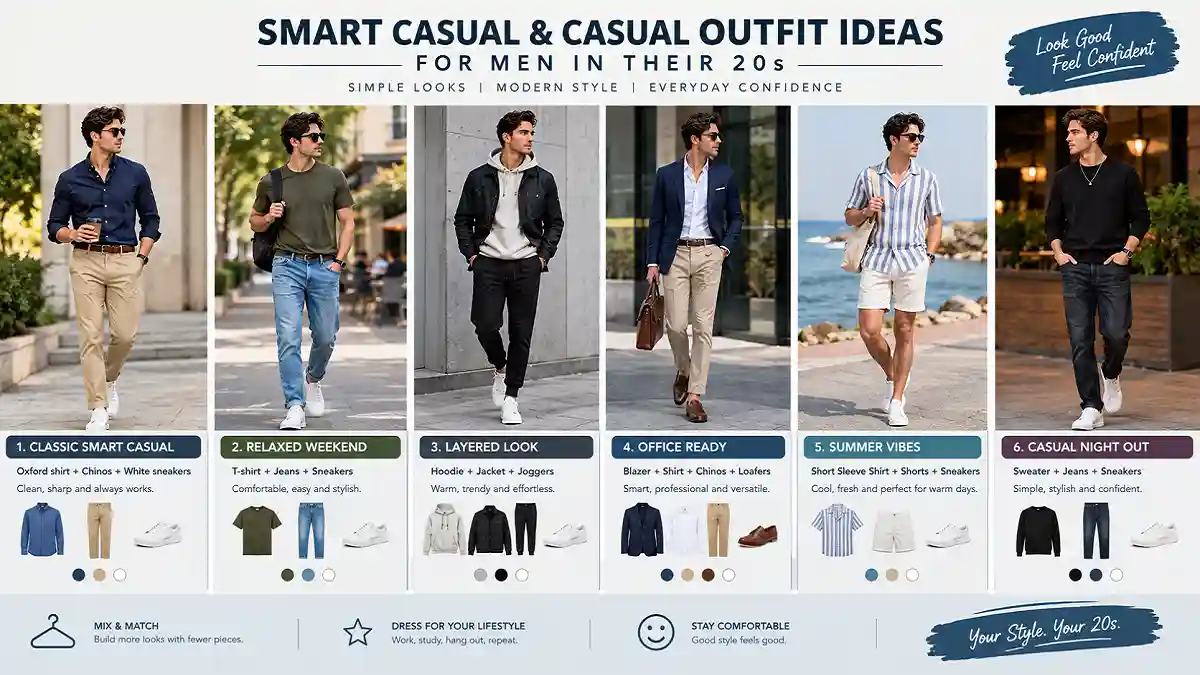
Smart casual and casual outfit ideas for men in their 20s

Outfit Formulas You Can Copy

Formulas remove guesswork. Swap in your own colors.

OccasionFormula
Everyday casualWhite tee + dark jeans + white sneakers + simple watch
CollegeHoodie or crewneck knit + straight jeans + clean sneakers + backpack
Smart casual / workOxford shirt + navy chinos + brown loafers + belt
Date nightDark knit or fitted overshirt + dark jeans + leather boots or loafers
WeekendHenley or tee + chinos or relaxed jeans + canvas sneakers
Layered cool weatherTee + shirt or knit + jacket or coat + boots
Wedding guestMid tone suit or tailored trousers + shirt + dress shoes (follow the dress code stated on the invitation)

Colors that combine easily: Navy, white, grey, olive, tan and black form a safe base. Choose one or two accent colors and add pattern in only one item per outfit.
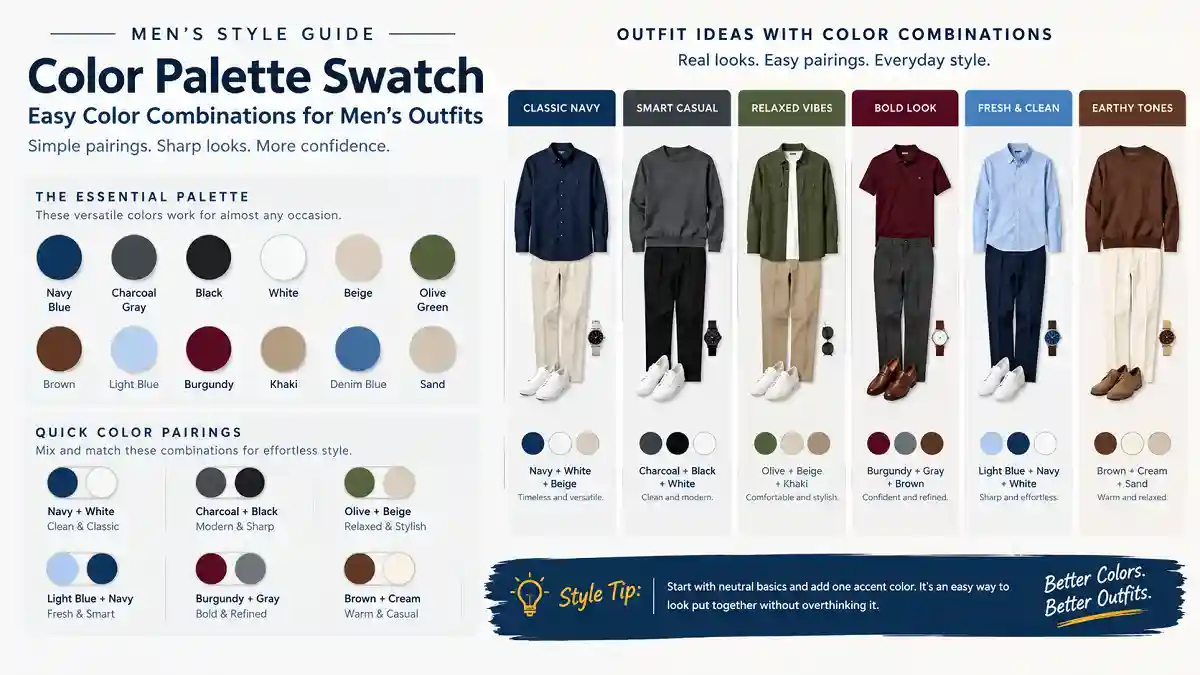
Easy color combinations for men’s outfits

Building a Wardrobe on a Budget

A small budget works if you shop with a plan.

  • Buy basics first: Spend your money on items you will wear weekly such as jeans, shoes and a jacket.
  • Save on trend pieces: If a trend might not last, buy it cheaply or skip it.
  • Check fabric before price: Look at the composition label. Natural fibers such as cotton, wool and linen generally last longer than very thin synthetic blends though quality varies by construction.
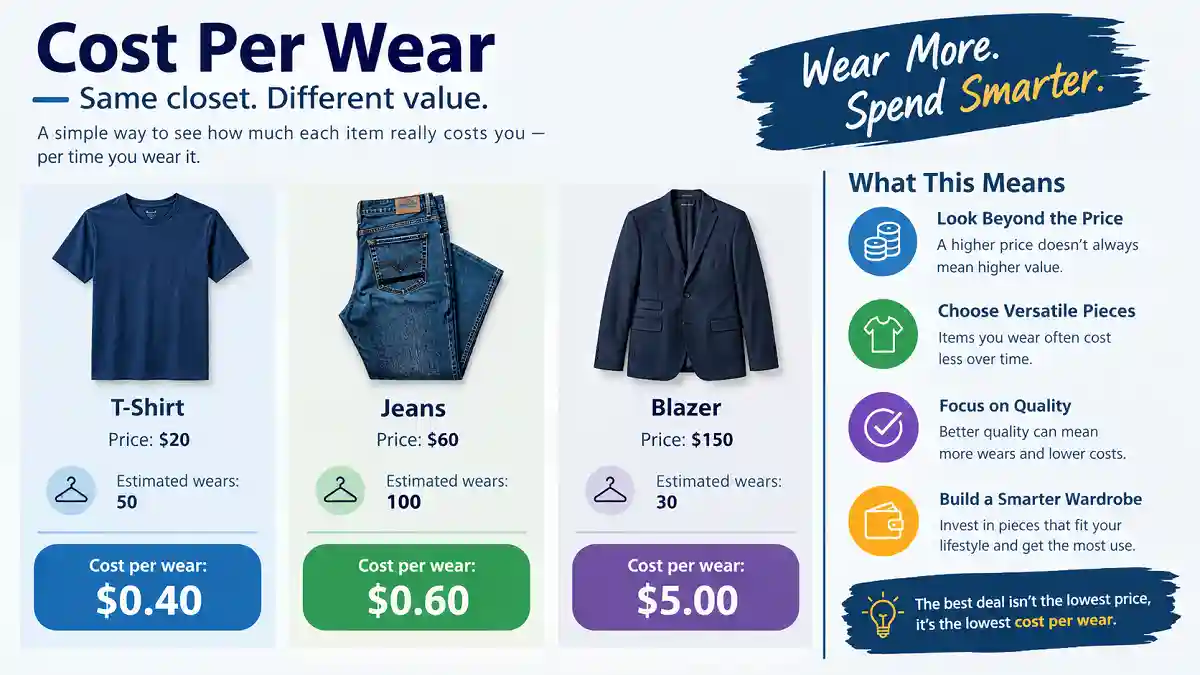
  • Use cost per wear: A $100 jacket worn 100 times costs $1 per wear which beats a $20 shirt worn twice.
  • Buy in off season sales: Winter coats and summer shirts are usually discounted at the end of their season.
  • Consider secondhand: Thrift stores and resale apps can offer good quality items at lower prices.
  • Fabric quality checklist: Hold the fabric to the light (very see through means thin), check that seams are straight, pull gently to see if it recovers shape and read the care label before buying.

Men Eyeglasses Trends 2026: Best Glasses Frames and Styles

Dressing by Season
  • Spring: Light layers work best. Try a shirt jacket or lightweight bomber over a tee with chinos.
  • Summer: Breathable fabrics such as linen and light cotton keep you cool. Linen wrinkles by nature, which is part of its look. Pair with shorts or light trousers and loafers or canvas shoes.
  • Fall: Add texture with knitwear, overshirts and boots. Layers let you adjust to changing temperatures.
  • Winter: Use the layering sequence, a base tee, a mid layer knit, then a coat. Wool coats and insulated jackets add warmth without bulk. Keep fits slightly roomier so layers do not feel tight.
Cost per wear comparison for men’s clothing

Common Mistakes to Avoid

  • Buying clothes that are too big or too tight which is the most common fit problem.
  • Following every trend without checking whether it suits you.
  • Wearing worn out, scuffed shoes with a good outfit.
  • Ignoring grooming Clean hair, nails and skin matter as much as clothes.
  • Over accessorizing One or two items are enough.

Developing Your Own Style

Personal style comes from repeating what works and adjusting it. Save outfit photos you like, note the shared elements (colors, silhouettes, fabrics) and test one change at a time. Wearing a look you feel comfortable in matters more than matching a trend.

Time sensitive note: Specific seasonal trends change quickly. This guide focuses on lasting fundamentals. Check current fashion publications for this season’s specific trends.

How to Care for Your Clothes

Care extends the life of your wardrobe and reduces replacement spending. Wash dark jeans inside out and less often. Follow label instructions for knitwear and avoid hanging wool, since it stretches. Use shoe trees or stuff shoes with paper to hold their shape, rotate your shoes and clean sneakers regularly.

FAQ

Start with fit, then simplify. Choose well fitting basics in neutral colors, add one polished piece to casual outfits and keep clothes clean and pressed.

Dark jeans, chinos, an Oxford shirt, plain tees, white sneakers, a knit, a versatile jacket, one pair of smarter shoes and a simple watch.

They should sit comfortably at the waist, fit the thigh without pulling and end at or slightly above the shoe. Slim, straight and relaxed cuts can all work depending on your build.

Smart casual combines casual and formal pieces such as chinos with an Oxford shirt and loafers or clean sneakers. It looks put together without a suit.

Navy, white, grey, olive, tan and black. Neutrals combine freely and one accent color is enough.

White sneakers, canvas shoes, leather sneakers, loafers and casual boots cover most casual outfits.

Conclusion

Strong 20s fashion menswear comes down to a few habits: choose clothes that fit, build around versatile basics, stick to a simple color palette and add personality through one or two standout pieces. Start with the essentials checklist, fill the gaps first and let your style develop over time.

Ready to put this into practice? Browse our guides on capsule wardrobes, smart casual outfits and budget shopping to take the next step.

Helpful Resources

Leave a Reply

Your email address will not be published. Required fields are marked *