Burka vs Hijab: Key Differences, Definitions and Visual Guide
Understanding traditional Islamic clothing can sometimes feel complex due to the variety of terms used across different regions and cultures.
Words like hijab, burka, niqab and chador are often used interchangeably in general conversation, yet they refer to distinct garments with unique levels of coverage, cultural origins and visual styles.
This guide provides a clear breakdown of the burka vs hijab comparison, highlighting their visual differences, historical context and how they relate to other traditional coverings across the Muslim world.
What Is the Difference Between a Burka and a Hijab?
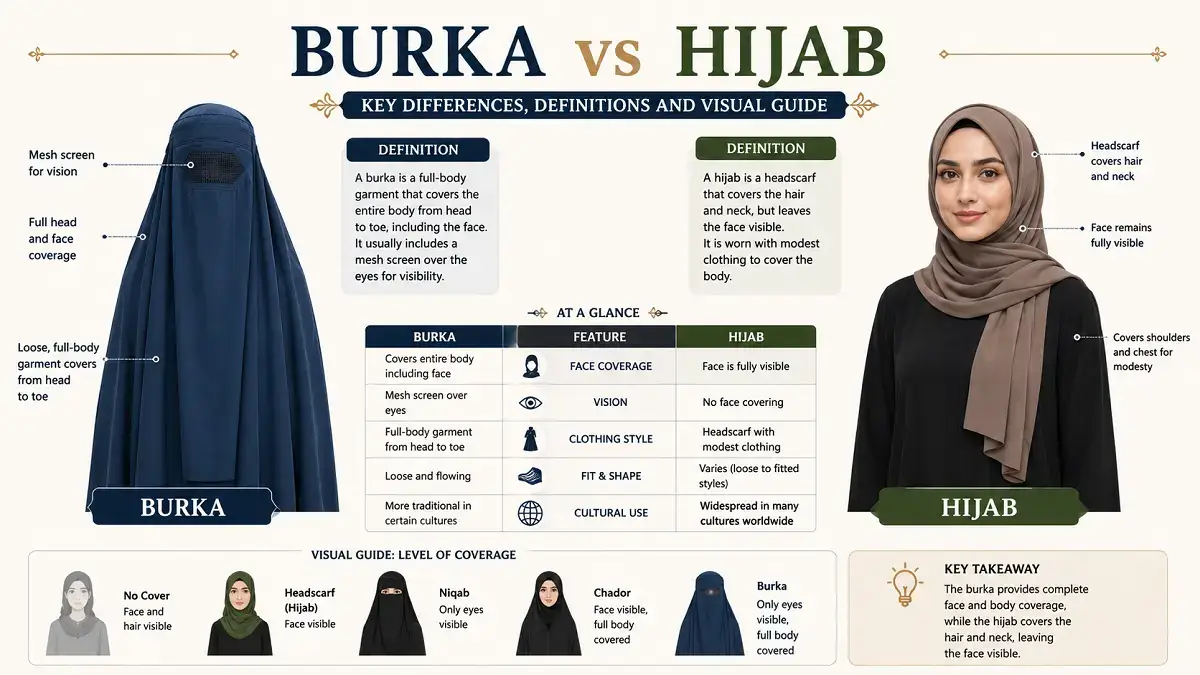
- The primary difference in the burka vs hijab comparison is the extent of facial and body coverage.
- A hijab is a headscarf that covers the hair, ears and neck while leaving the entire face visible.
- In contrast, a burka is a full-body veil that covers the face and body completely, using a mesh screen over the eyes.
What Is a Burka?
- A burka (also spelled burqa) is the most concealing of all traditional Islamic garments for women.
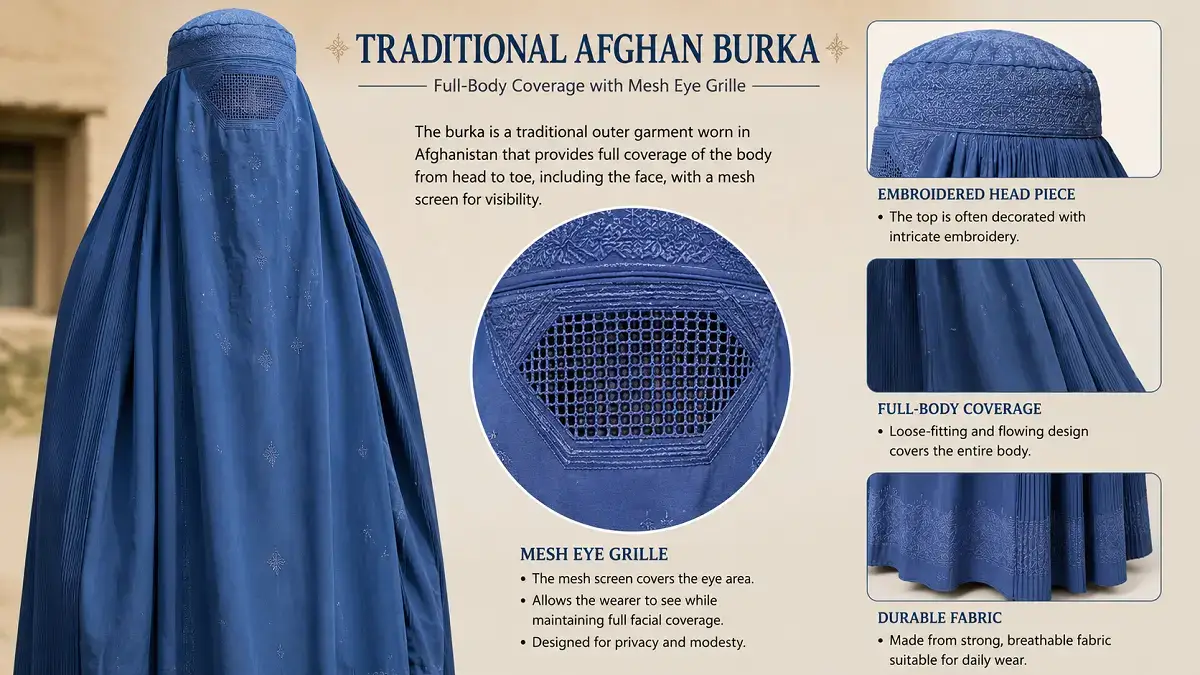
- It is a one-piece outer garment that covers the entire body from the top of the head down to the feet.
Key Characteristics of a Burka:
- Full-Face Coverage: The face is entirely concealed.
- Mesh Screen: A fabric grille or mesh screen is sewn over the eye area, allowing the wearer to see out while preventing others from seeing in.
- Loose Fit: The garment drapes loosely over the torso and legs to conceal the shape of the body.
- Regional Usage: The burka is most historically associated with Central and South Asia, particularly Afghanistan and parts of Pakistan.
The term burka specifically denotes this full body envelope with the integrated eye mesh, distinguishing it from garments that leave the eyes uncovered.
What Is a Hijab?
- The word hijab comes from the Arabic root meaning partition or curtain.
- In religious jurisprudence, hijab refers broadly to the concept of modesty in behavior, dress and speech for both men and women.
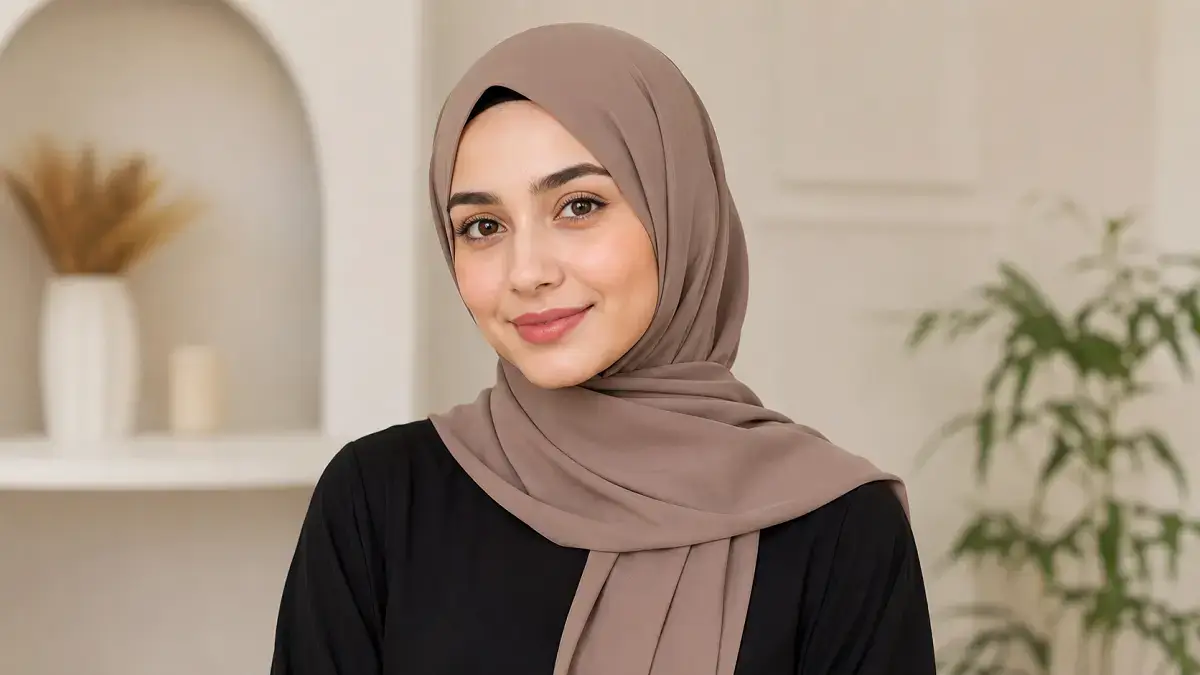
- In everyday modern usage, however, a hijab specifically refers to a headscarf worn by Muslim women.
Key Characteristics of a Hijab:
- Hair and Neck Coverage: It wraps around the head to cover the hair, ears and neck completely.
- Open Face: The oval of the face including the forehead, eyes, nose, cheeks and mouth remains fully visible.
- Versatile Styles: Hijabs come in diverse fabrics (such as chiffon, jersey, silk and cotton), colors and prints.
- Global Presence: It is the most common form of Islamic headwear worldwide, worn across North America, Europe, the Middle East, Africa and Asia.
Burka vs Hijab: Side-by-Side Comparison
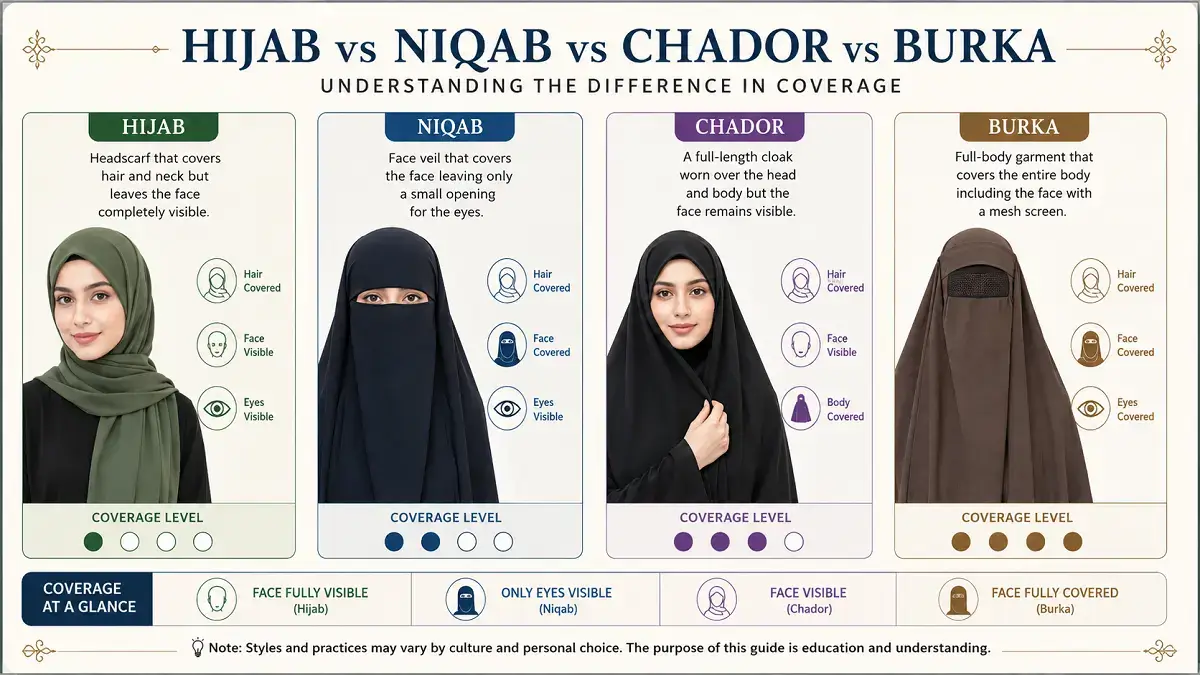
To clearly visualize how the burka and hijab differ from one another as well as from other prominent Islamic garments the table below outlines key functional features:
| Feature | Hijab | Burka | Niqab | Chador |
|---|---|---|---|---|
| Primary Area Covered | Hair, ears and neck | Entire body and face | Face and hair (eyes exposed) | Entire body and hair (face exposed) |
| Face Visibility | Fully visible | Fully covered | Eyes only visible | Fully visible |
| Eye Coverage | Uncovered | Covered by mesh grille | Exposed slit for eyes | Uncovered |
| Garment Type | Headscarf / Wrap | Full-body envelope | Face veil (paired with headscarf) | Full-length semicircle cloak |
| Fastening Style | Pinned or wrapped | Draped from head | Tied behind the head | Held closed by hand or under arms |
| Primary Regions | Worldwide | Afghanistan, South Asia | Arabian Peninsula, North Africa | Iran, Shiite communities |
Beyond Burka and Hijab: Understanding Niqab, Chador and Other Coverings
When exploring the burka vs niqab vs hijab distinction, it becomes clear that several other traditional garments fill the spectrum between a basic headscarf and a full burka.
The Niqab
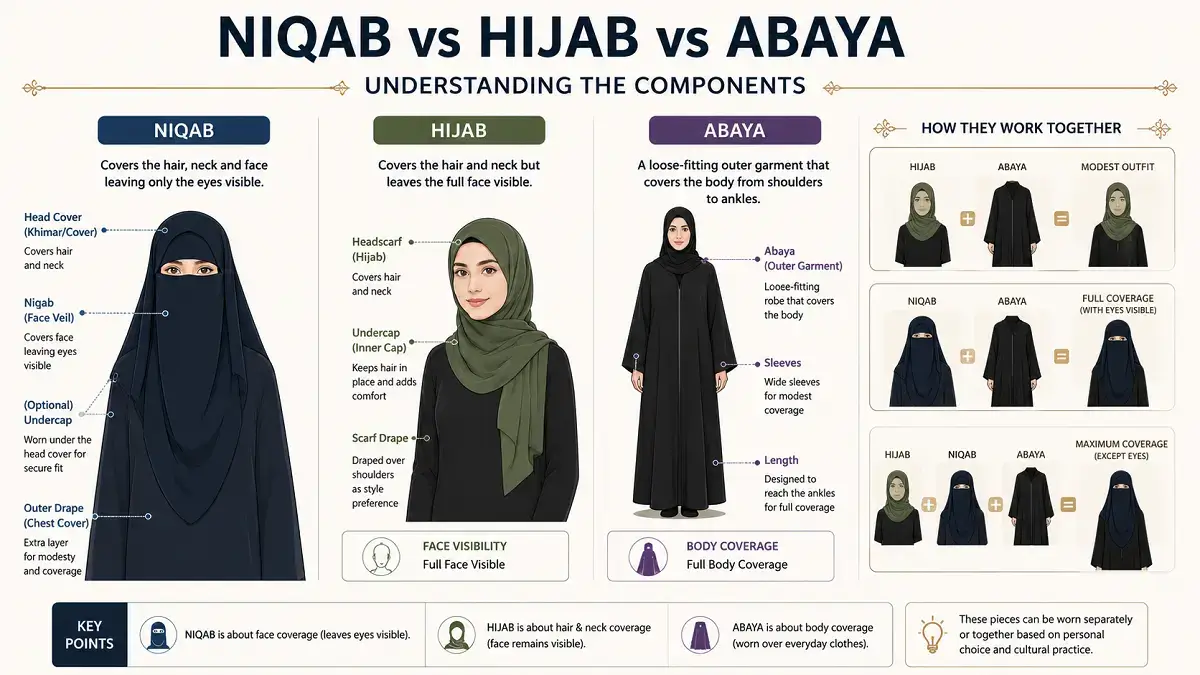
The niqab is a face veil that covers the lower half of the face (nose, mouth and chin) while leaving the area around the eyes uncovered. It is usually worn in combination with a separate headscarf.
- Difference from Burka: Unlike the burka, the niqab does not feature a mesh eye grille, allowing the wearer’s eyes to remain directly visible.
- Difference from Hijab: The hijab leaves the whole face open, whereas the niqab conceals everything except the eyes.
The Chador
The chador is a full-body, open-front cloak worn primarily in Iran. It drapes over the top of the head and falls to the ankles.
- Difference from Burka: The chador leaves the face entirely exposed. It does not have eye mesh or integrated face coverings.
- Wearing Style: It is often held shut in the front by the wearer’s hand or tucked under the arms, typically worn over a headscarf and modest street clothes.
Other Related Modest Garments
- Abaya: A long, loose-fitting robe-like dress worn over regular clothing, popular across the Arabian Gulf. It is often paired with a hijab or niqab.
- Khimar: A long, cape-like head covering that drapes down to the waist or hips, covering the hair, neck and shoulders while leaving the face uncovered.
- Shayla: A long, rectangular scarf wrapped loosely around the head and pinned at the shoulder, common in the Gulf region.
Burka and Hijab in Islam: Religious and Cultural Context
The diversity of Islamic dress around the world is shaped by both religious interpretation and regional culture.
Religious Foundations
The Islamic principle of modesty (haya) is derived from passages in the Quran and the practices (Sunnah) of the Prophet Muhammad. Scholars across various Islamic schools of thought (Fiqh) agree on the requirement of modest dress but interpretations vary regarding what specific garments are required:
- Majority View: Most classical and contemporary scholars hold that women should cover their entire body except for the face and hands when in public. This interpretation corresponds functionally to the hijab.
- Alternative View: Some traditional scholars interpret modesty guidelines to require covering the face as well, leading to the practice of wearing the niqab or burka.
Cultural Influences
Geographic environment, local tradition and climate play major roles in how modesty guidelines are practiced:
- Central Asia: The blue or pastel burka (often called chadari in Afghanistan) developed as a regional garment reflecting historical local customs.
- Arabian Peninsula: The combination of a black abaya, hijab and niqab is traditional in desert climates.
- Southeast Asia: Brightly colored, patterned headscarves (known locally as tudung in Malaysia and Indonesia) are standard.
Materials, Construction and How They Are Worn
The practical construction of these garments reflects their regional uses and functionality.
Hijab Fabrics and Styling
Modern hijabs prioritize breathability and comfort. Common materials include:
- Jersey: Stretchable, low-maintenance fabric ideal for everyday wear without pins.
- Chiffon: Lightweight and elegant, often used for formal occasions.
- Cotton and Viscose: Highly breathable fabrics suited for warm weather.
A hijab is typically worn over an “under-cap” or underscarf, which keeps hair secure and prevents the outer scarf from slipping.
Burka Construction
A traditional burka is usually made from lightweight woven polyester or cotton to allow airflow in hot climates. It consists of:
- Cap Portion: A fitted embroidered crown that sits on top of the head.
- Pleated Body: Heavy pleating extending from the crown to create a loose, flowing drapery.
- Mesh Screen: Fabric embroidery with tiny perforated openings placed precisely over the eye line.
How to Wear a Hijab with Other Garments
Women who choose higher levels of coverage may combine multiple items. For instance, a woman might wear an under-cap, wrap a hijab over her hair, attach a niqab over her nose and mouth and wear an abaya over her clothing.
In contrast, a burka is an all-in-one piece that replaces the need for separate headscarves and face veils.
Frequently Asked Questions
Conclusion
Understanding the difference between a burka vs hijab comes down to recognizing the degree of coverage and regional styling. The hijab is a headscarf that leaves the face exposed and is worn by Muslim women worldwide.
The burka is a full-body covering with an eye mesh screen, predominantly tied to specific regional traditions in South and Central Asia. Whether examining a hijab, niqab, chador or burka, each garment reflects a unique intersection of religious expression, cultural heritage and personal identity.
To learn more about cultural traditions and global attire, explore our comprehensive guides on regional modest fashion and cultural heritage studies.







Really enjoyed this guide! The visual comparison made the differences between burka and hijab much easier to understand.
Really enjoyed this guide! The clear comparison makes the differences between burka and hijab easy to understand.