What Is an Abaya? Meaning, History and How It’s Worn in 2026
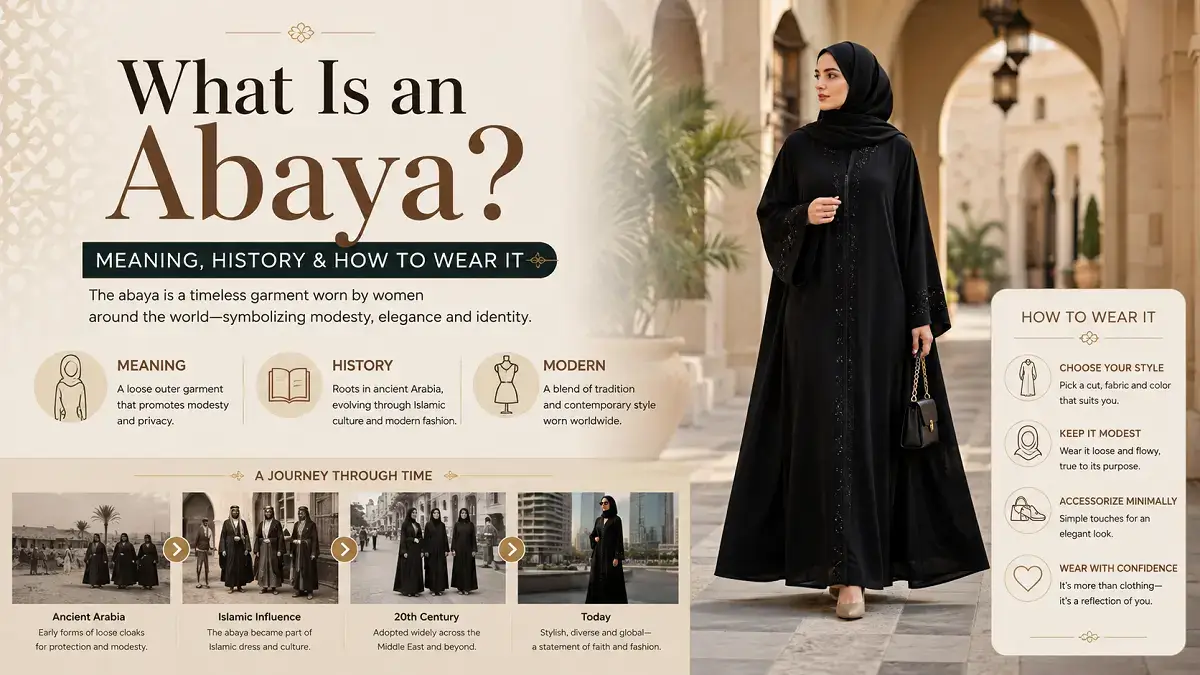
Somewhere between a robe, a coat and a cultural symbol sits one of the most recognizable garments in the world: the abaya.
It shows up in airport arrivals halls in Riyadh, on runway lookbooks in Paris and in millions of search queries from people who’ve seen the word but never had it properly explained.
This guide answers what an abaya actually is, why women wear it, how it differs from similar garments and what the current rules actually say in 2026 because a lot of what’s written online about “requirements” is several years out of date.
Quick Answer
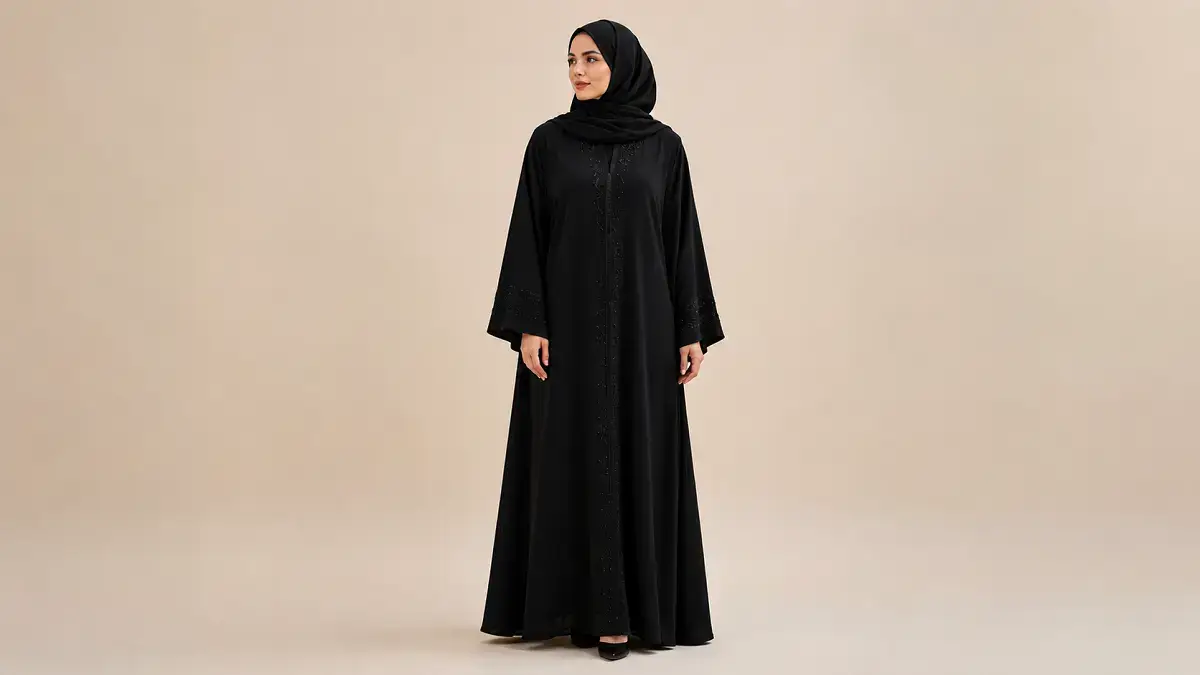
An abaya is a loose fitting, full length outer garment usually black, though modern versions come in many colors worn by many Muslim women over regular clothing for modesty.
It covers the body from the shoulders to the ankles, leaving the face, hands and often the feet visible. It’s distinct from a jilbab, thobe and hijab, each of which serves a different purpose.
What Is an Abaya?
An abaya is a loose, flowing over garment, essentially a robe-like dress, worn by women across much of the Muslim world, especially the Middle East, North Africa and parts of the Horn of Africa.
The word comes from Arabic and is generally translated as “cloak.” It’s designed to be worn on top of everyday clothing rather than as a standalone outfit, though many modern styles are cut and finished well enough to function as one.
A traditional abaya covers the whole body except the head, hands and feet. Some versions include a matching or attached head covering but most are a separate garment worn alongside a hijab or shayla (headscarf).
It can be a large draped square of fabric or a tailored, kaftan style dress with sleeves and it can close down the front, wrap or stay fully open like a duster coat.
A quick note on terminology, since it comes up often in search: “abaya,” “abayas” (plural) and “aba” all refer to the same core garment.
“Abaya dress” and “abaya robe” are simply descriptive variations people use for the same item, not different categories of clothing.
The History and Origins of the Abaya
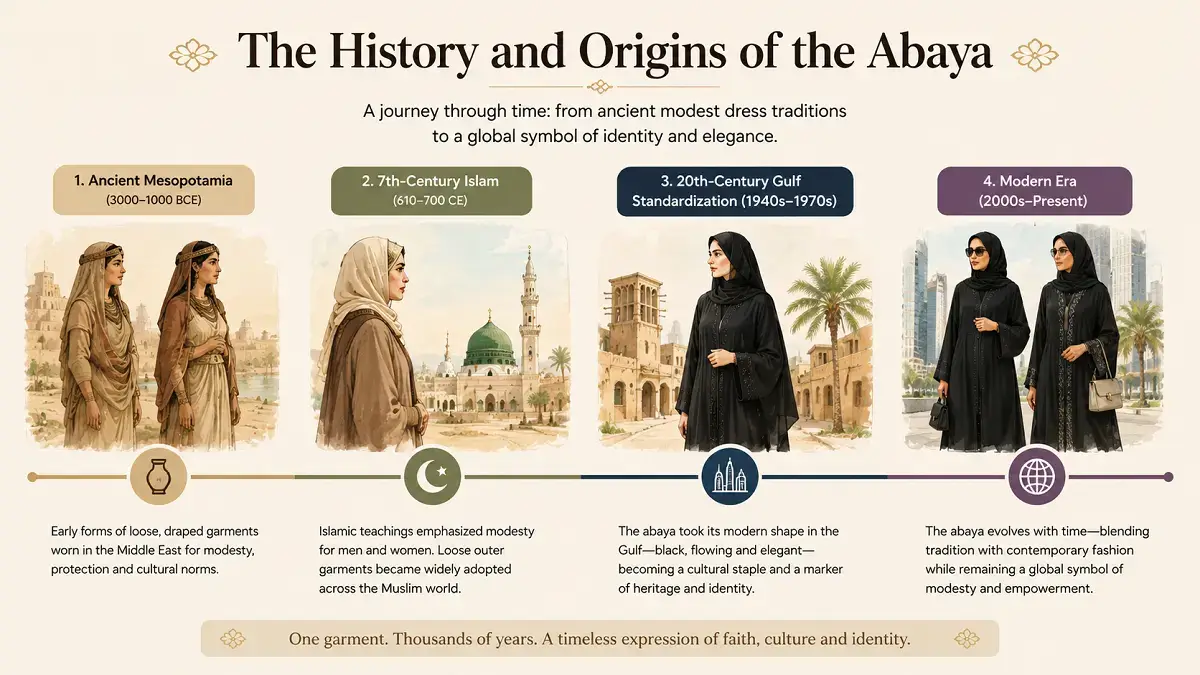
The abaya’s roots are older than Islam itself. Historians trace loose, draped robes back to ancient Mesopotamia and pre Islamic Arabia, roughly 4,000 years ago, where they served a practical purpose: protecting the body from sun, wind and blowing sand in a harsh desert climate.
These early garments were more about survival and status than religion. That changed with the rise of Islam in the 7th century, when modesty became a defined principle in dress and conduct.
Over time, the loose desert cloak took on religious and cultural meaning as a practical way to express modest dress.
Historically, these garments weren’t always black that association solidified more recently, particularly through the 20th century in Saudi Arabia, the UAE and Qatar, partly due to the wide availability of black synthetic fabric and partly through cultural convention.
Today, the abaya sits at the intersection of that long history and a fast growing modest fashion industry, appearing in everything from simple daily wear pieces to designer eveningwear.
Why Do Women Wear Abayas?
There isn’t one single reason women wear an abaya; the motivations are religious, cultural and personal, often all at once and they vary by country and by individual.
Religious reasons
Modesty is a core principle in Islam that extends beyond clothing to behavior and interaction. Many women wear the abaya as an expression of that principle and, for some, as a visible marker of faith.
Cultural reasons
In Gulf countries especially, the abaya is closely tied to national and regional identity. It connects women to family heritage and community norms independent of religious observance; it’s simply how women in that culture have dressed for generations.
Personal reasons
Comfort, a sense of privacy, protection from sun and attention and straightforward personal style are all reasons women give for choosing to wear one, even where it isn’t required by law or strict religious obligation.
Does Islamic Law Require Women to Wear an Abaya?
This is genuinely more nuanced than a yes or no answer. The Quran doesn’t mention “the abaya” by name.
It calls for modest outer garments commonly referenced from Surah Al Ahzab (33:59) and Surah An Nur without specifying a particular cut, color or style.
The abaya is one regional, cultural implementation of that broader modesty principle. Elsewhere in the Muslim world, the same underlying value shows up as a jilbab, a chador or other forms of modest outerwear.
Scholars and communities differ on exactly how prescriptive the requirement is and how it should be expressed in clothing, which is why practice varies so much from country to country.
Abaya vs Jilbab, Thobe and Hijab: What’s the Difference?
These four terms get confused constantly in search, so it’s worth being precise about each.
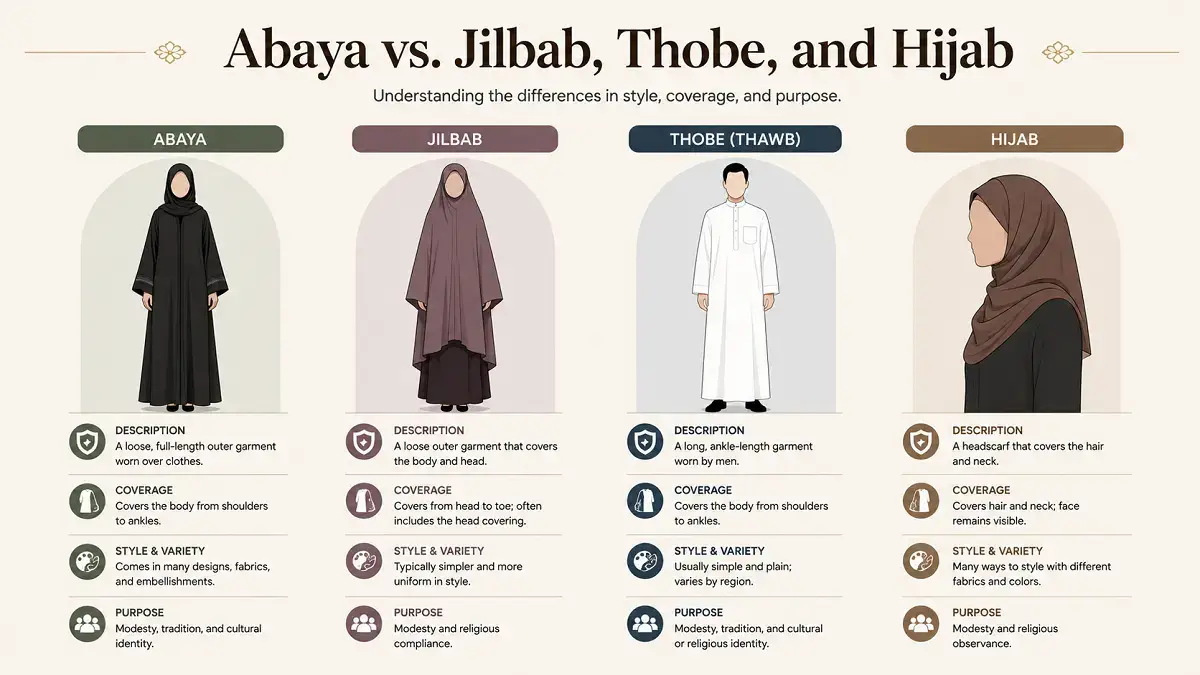
Abaya vs Jilbab
Both are loose outer garments worn for modesty and in casual conversation people often use the words interchangeably. The meaningful difference is in construction and regional association.
An abaya is typically a separate robe worn without built in head coverage, paired with a hijab or shayla underneath or over it.
A jilbab, more associated with Southeast Asian and South Asian modest dress traditions, is often a more structured, all in one garment sometimes with an integrated or attached head covering and tends to use heavier fabric.
Abaya vs Thobe
This comparison trips people up because both are long, flowing robes but they’re not interchangeable and they’re not worn by the same people. The abaya is a women’s garment.
The thobe (also called a thawb, kandura or dishdasha) is the equivalent traditional garment for men, typically ankle length, often white in summer and darker for winter and especially common across the Gulf states.
Abaya vs Hijab
This one’s a category mismatch rather than a close comparison.
A hijab is a headscarf that covers the hair and neck. It’s about the head, not the body. An abaya is a full body outer garment.
Muslim women very often wear both together but they are two separate pieces of clothing serving two separate functions, not two names for the same thing.
| Garment | Covers | Typically worn by | Head covering included? |
|---|---|---|---|
| Abaya | Body, shoulders to ankles | Women | No worn with separate hijab/shayla |
| Jilbab | Body, often head to toe | Women | Sometimes, depending on region/style |
| Thobe | Body, neck to ankles | Men | No |
| Hijab | Hair and neck only | Women | N/A it is the head covering |
Abaya Colors, Fabrics and Styles
Black abaya remains the most recognized and, in the Gulf, still the most commonly worn abaya color, largely for cultural and historical reasons.
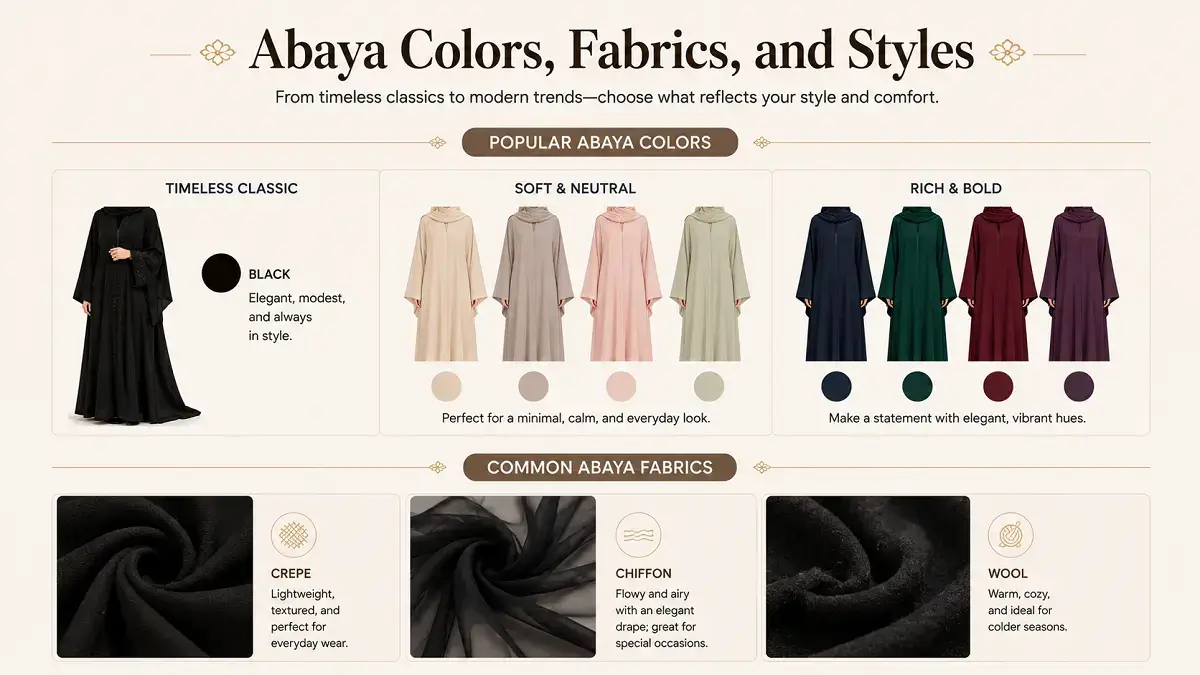
But the color range today is genuinely wide; pastels, jewel tones, neutrals and prints are all common, particularly in Western modest fashion markets and among younger buyers.
Fabric choice usually comes down to climate and occasion. Lightweight crepe, chiffon and jersey suit hot weather and everyday wear because they breathe and drape well.
Wool blends, velvet and heavier weaves are more common for cooler seasons and formal pieces.
In terms of form, an abaya can be closed (pulled over the head, no front opening), open front (worn like a long cardigan or duster over an outfit) or cut more like a kaftan with a wrap or belt.
Embroidery, beading and lace trim have historically signaled craftsmanship and social status and that’s still largely true today a heavily embellished abaya generally reads as more formal or higher end than a plain daily wear piece.
Best Fashion Books to Read in 2026.
What Do Women Wear Under an Abaya?
Because the abaya is an over garment rather than a standalone outfit, most women underneath it wear whatever regular clothing suits their day: jeans and a top, a casual dress, work clothes or activewear chosen based on climate, occasion and personal comfort.
How much that inner layer needs to coordinate depends on the abaya’s style. A closed abaya provides full coverage on its own, so what’s underneath matters less for modesty and more for comfort.
An open front abaya reveals more of the inner outfit, so women typically choose a more deliberate under layer: a slip dress, a long tunic with wide leg trousers or a long sleeve top, often chosen to coordinate in color with the abaya itself.
In hot climates, breathable cotton or linen is the practical choice; in cooler weather, turtlenecks and lightweight thermal layers work well underneath without adding bulk.
Who Wears an Abaya and Is It Required? Legal and Cultural Rules by Country
This is the area where outdated information circulates most, so the current, verified 2026 picture matters.
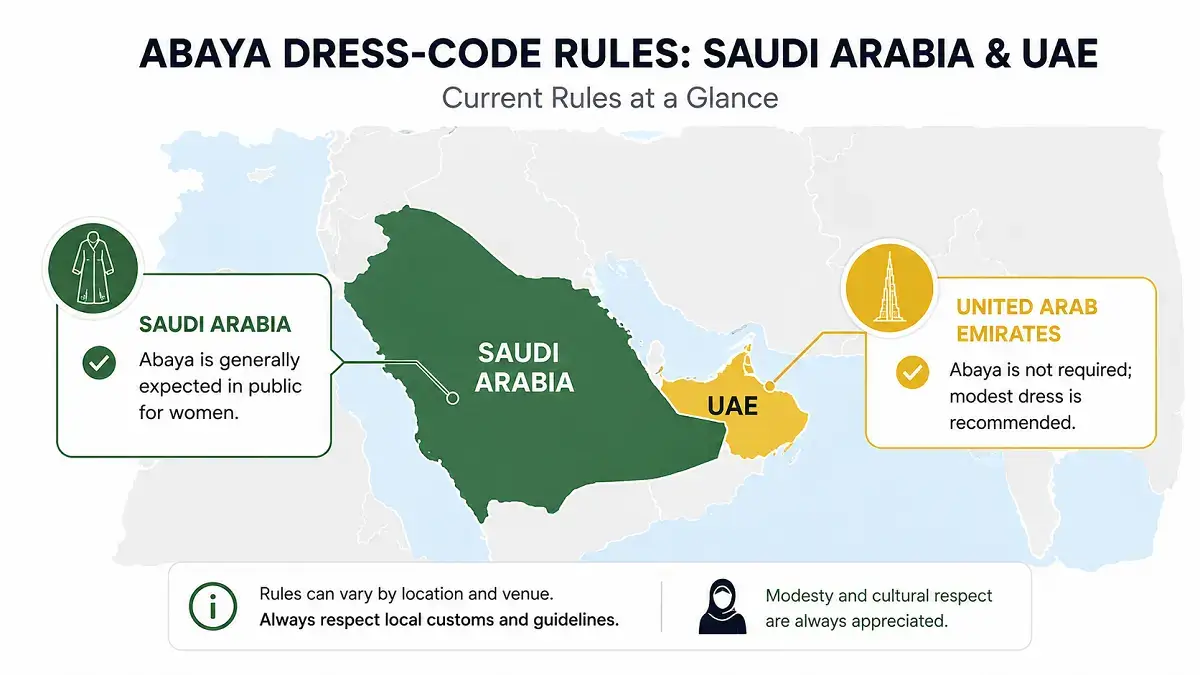
Saudi Arabia
For decades, Saudi Arabia legally required women in public including foreign visitors to wear an abaya, enforced by religious authorities.
That changed in 2019, when the Kingdom’s Public Decency Regulations replaced the mandatory abaya rule with a general, principles based modest dress standard: cover shoulders and knees, avoid transparent or offensive clothing.
As of 2026, wearing an abaya is not a legal requirement for tourists or residents.
Many Saudi women and many long term expat women living in cities like Jeddah, continue to wear one by personal choice, family expectation or cultural habit but it is no longer the law.
UAE and Dubai
Dubai and the wider UAE have never legally required tourists or expat women to wear an abaya in public.
The one clear exception is inside a mosque, where a full length abaya and head covering are required out of respect and these are usually provided on site for visitors who don’t have their own.
Emirati women traditionally wear the abaya, often paired with a shayla (a rectangular headscarf common across the Gulf), as an expression of national identity but this is a cultural and personal choice rather than a rule imposed on non citizens.
The general pattern across the Gulf
Expectations shift by setting, not just by country: malls and government buildings tend to expect more modest dress than private beaches or hotel pools and modesty expectations tighten everywhere during Ramadan.
The safest general approach for any visitor is to check current guidance for the specific city and venue rather than assume older “mandatory abaya” information still applies.
Can Non Muslim Women Wear an Abaya?
Yes, There’s no religious or civil rule against non Muslim women wearing an abaya and plenty do as respectful attire while visiting the Gulf, as part of a personal modest fashion wardrobe or simply because they like the garment.
Public discussion online is split on how to think about this: some commentators frame it, similar to a kimono or a sari worn outside its culture of origin, as appreciation when worn thoughtfully and with awareness of its meaning; others feel more protective of it given its religious associations.
There isn’t a single settled verdict but a common thread across most perspectives is that intent and respect matter more than the fact of wearing it. Treating the abaya as a costume or mockery is where most people draw the line, rather than the act of wearing it at all.
Abayas for Different Occasions
Not every abaya is built for the same purpose and the style shifts noticeably by occasion.
Daily wear abayas favor simple cuts, breathable fabric and minimal embellishment practical for errands, work commutes or the school run.
Office and professional wear abayas lean toward structured, tailored silhouettes in neutral colors, with subtle detailing appropriate for a workplace setting rather than an evening one.
Party and special occasion abayas use richer fabrics like satin or velvet, with embroidery, beading or lace and often a more fitted or dramatic silhouette, the kind of piece worn to a wedding, an Eid celebration or a formal evening event.
Active and gym settings are a bit different: a traditional abaya isn’t built for movement, so many women who want modest coverage during exercise opt instead for loose fitting athletic sets, long leggings, longer tops and a sports hijab rather than a standard abaya.
Frequently Asked Questions
Conclusion
The abaya is a lot more than “the black robe” it’s often reduced to online: it’s a garment with roots stretching back thousands of years, layered religious and cultural meaning that varies by country and by individual and a legal landscape that has genuinely changed in the last several years most notably Saudi Arabia’s 2019 reform and the UAE’s long standing lack of a mandatory wear rule for visitors.
Understanding it means understanding all of that together, not just the definition.
Whether you’re researching it out of curiosity, planning a trip to the Gulf or building a modest fashion wardrobe of your own, the abaya’s story is one of practicality, faith and identity evolving side by side.