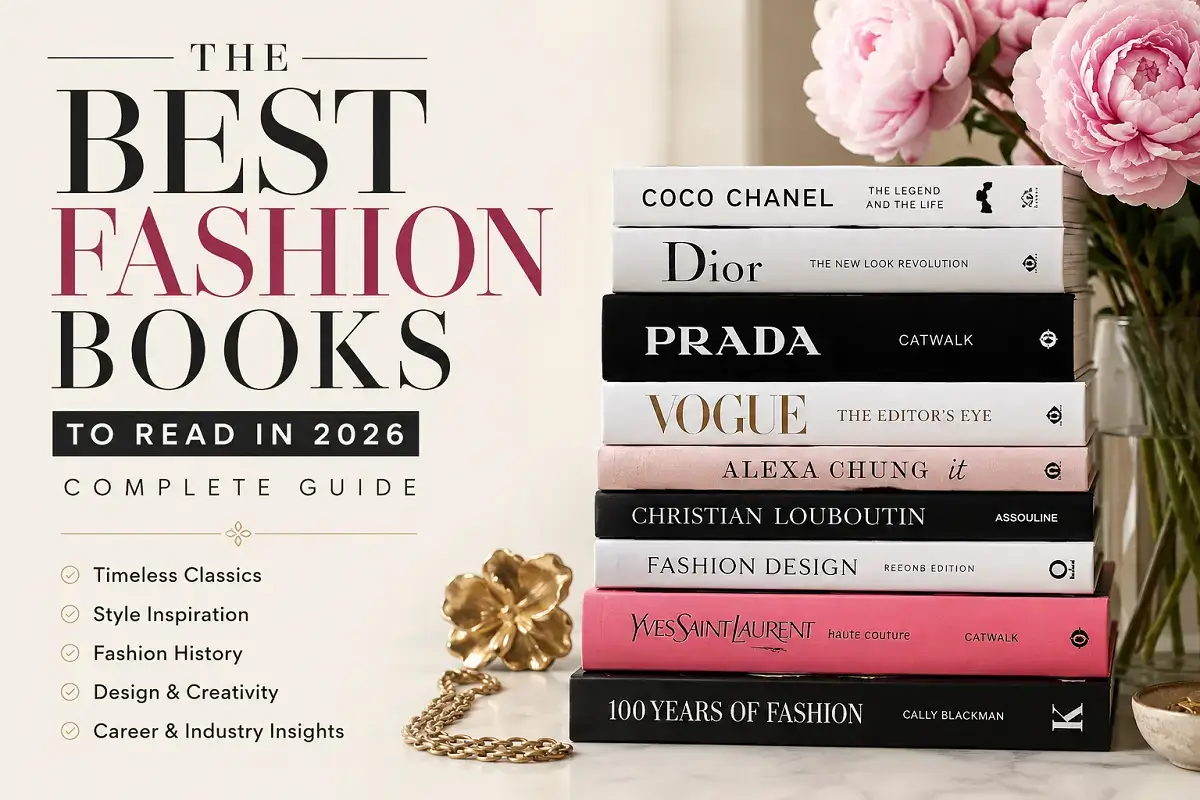
The Best Fashion Books to Read in 2026: A Complete Guide by Category
Walk into any well-stocked bookstore and you’ll usually find a whole shelf, sometimes a whole wall of fashion books, ranging from glossy Chanel monographs to dense patternmaking manuals.
That variety is exciting but it also makes it hard to know where to start. A design student, a gift-shopper and a collector building a coffee-table display are all typing the same search, yet they need completely different books.
This guide sorts fashion books into six clear categories coffee-table and photography books, history books, design and technical books, designer biographies, business and culture titles and style guides so you can go straight to the shelf that matches what you actually want: inspiration, education, a great gift or a mix of all three.
Quick Answer
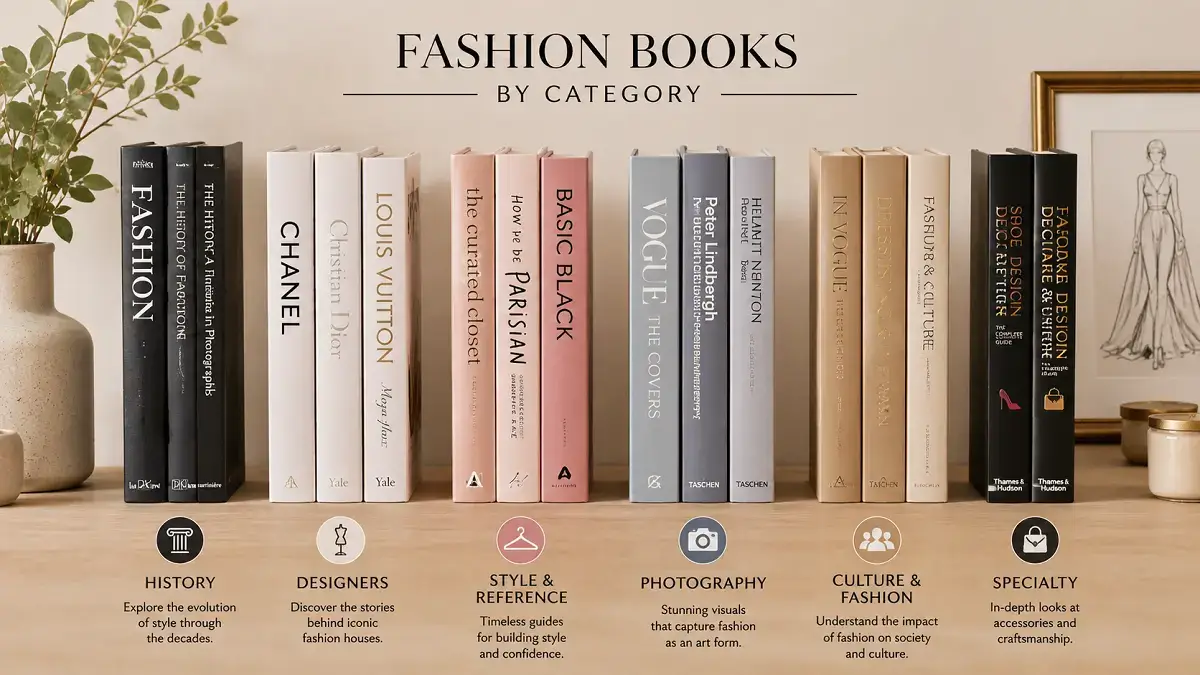
The best fashion books fall into six categories: coffee-table and photography monographs for visual inspiration, history books that trace how style evolved, design and technical guides for aspiring designers, biographies of major designers and editors, business and culture titles on the fashion industry and styling guides for building a personal wardrobe.
Types of Fashion Books at a Glance
Before diving into specific recommendations, it helps to see how these categories differ.
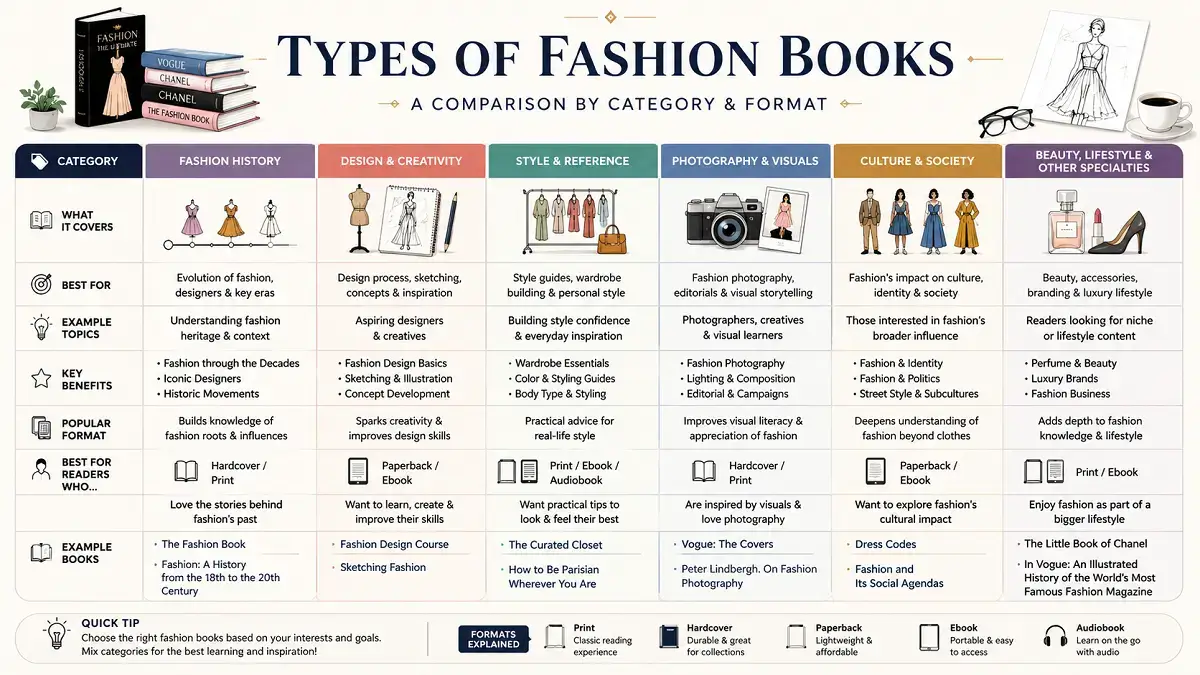
Each one serves a distinct purpose and knowing the difference up front will save you from buying a technical reference when what you really wanted was a gift-worthy photo book.
| Category | Best For | Typical Format | What You’ll Get |
|---|---|---|---|
| Coffee-table and photography | Gift-giving, decor, visual inspiration | Large-format hardcover | Runway photography, designer archives |
| History | Students, researchers, culture readers | Standard nonfiction hardcover/paperback | How fashion evolved and why it mattered |
| Design and technical | Design students, aspiring designers | Instructional paperback/spiral-bound | Sketching, patternmaking, garment construction |
| Designer biography | Fans of a specific designer or era | Memoir/biography hardcover | First-person or researched life stories |
| Business and culture | Industry professionals, sustainability readers | Nonfiction hardcover/paperback | How the fashion industry actually works |
| Style guides | Everyday readers building personal style | Practical paperback | Wardrobe advice, dressing principles |
Coffee-Table and Photography Books
Fashion coffee-table books are the category most people picture first: oversized, image-heavy hardcovers built for display as much as for reading.
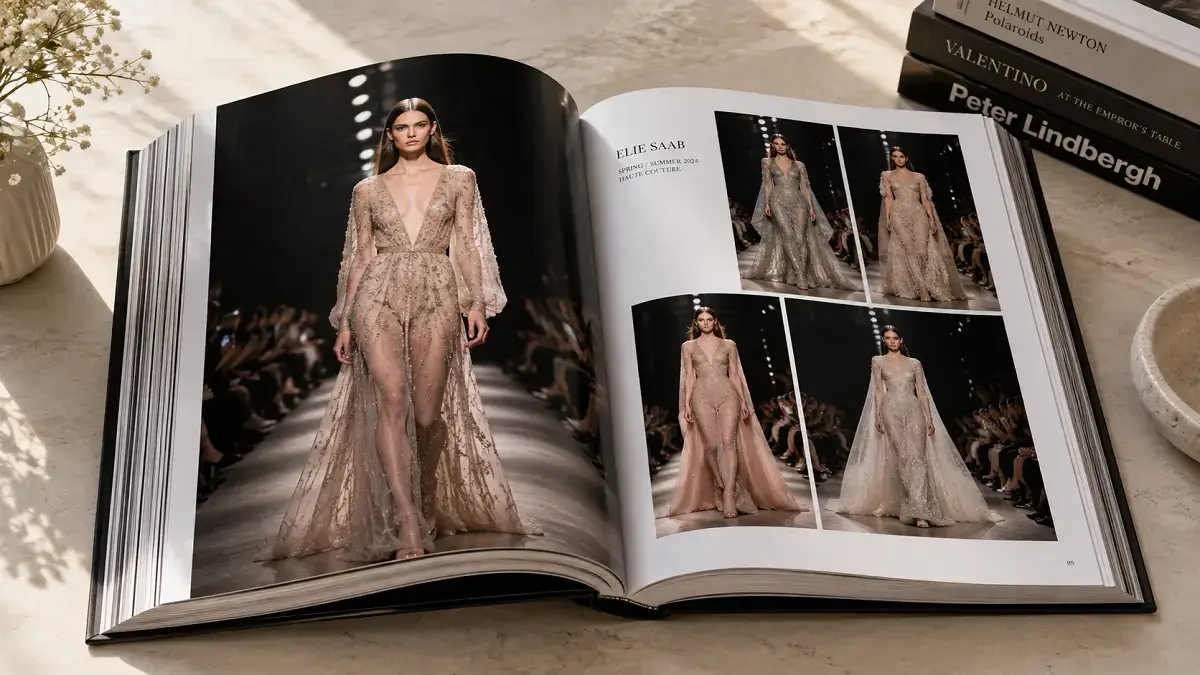
They work well as gifts, as room decor and as a way to browse decades of runway and editorial photography without reading a single page of text.
Publishers like Phaidon, Rizzoli and Thames and Hudson specialize in this format.
Phaidon’s The Fashion Book is a well-known example of an encyclopedic visual reference covering influential designers, photographers and models across a single volume, making it a solid all-purpose pick for someone who wants breadth rather than a deep dive into one house.
Brand-specific monographs, such as Danièle Bott’s Chanel: Collections and Creations, take the opposite approach: they focus entirely on one label’s design history, which suits a reader who already has a favorite house in mind.
Smaller-format series, like Assouline’s “Little Books of Fashion” editions on individual designers, offer a lower-cost entry point into the same genre.
Best if: you’re buying a gift, styling a shelf or want visual inspiration rather than technical instruction.
Fashion History Books
Fashion history books trace how clothing, style and the industry itself changed over time from a single era or event to centuries-spanning overviews.
They’re the right choice for anyone approaching fashion as a cultural or academic subject rather than a craft to practice.
Some titles focus on a defined moment: Robin Givhan’s The Battle of Versailles covers the 1973 fashion show that shifted global attention toward American designers, while books on Victorian fashion or the history of a specific decade work the same way, narrow in scope but rich in context.
Others take a broader lens, such as Valerie Steele’s Paris Fashion, which traces how one city shaped Western style over centuries or Caroline Weber’s Queen of Fashion, which uses Marie Antoinette’s wardrobe as a way into 18th-century politics and society.
Readers interested specifically in how fashion history has represented or overlooked Black designers, models and movements can find dedicated titles covering that history as well; it’s a growing and increasingly well-documented subfield.
For a lighter entry point, classics like Christian Dior’s The Little Dictionary of Fashion work almost like a glossary, introducing period terminology and philosophy in a format that’s easy to read cover to cover.
Best if: you want to understand why fashion looks the way it does, not just what it looks like.
Fashion Design and Technical Books
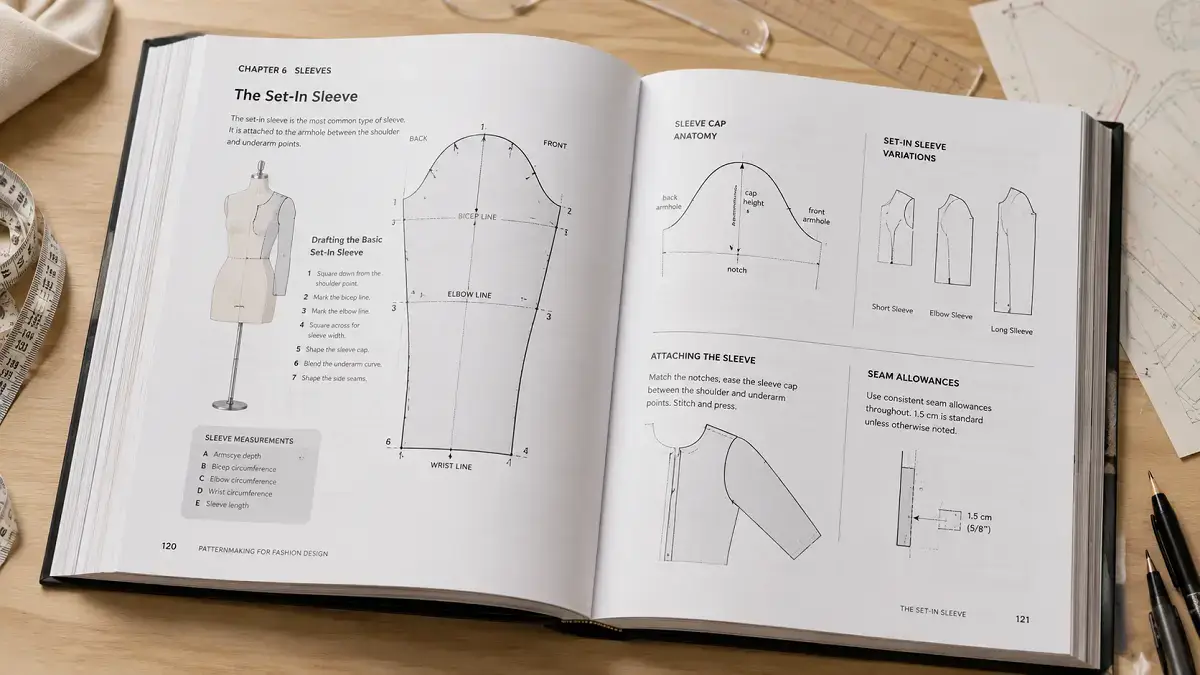
This category is built for doing, not just reading. Fashion design and technical books cover the practical skills behind making clothes: sketching, illustration, patternmaking and garment construction.
They’re the default recommendation for design students and anyone learning the craft rather than studying it from the outside. Patternmaking and construction sit at the technical end of the spectrum.
Helen Joseph-Armstrong’s Patternmaking for Fashion Design is widely used in design programs as a step-by-step reference for draping and pattern-cutting techniques.
Reference works like Fashionpedia function more like a visual dictionary, defining garment types, silhouettes and construction terms useful as a desk reference rather than a cover-to-cover read.
On the illustration side, books such as Nancy Riegelman’s 9 Heads teach fashion figure drawing and sketching techniques specifically, which is a different (and often earlier) skill than patternmaking.
A smaller but notable niche within this cluster covers Japanese pattern-cutting methods, associated with institutions like Tokyo’s Bunka Fashion College, which many design programs treat as a distinct technical tradition worth studying alongside Western patternmaking.
Best if: you’re a design student, hobbyist sewer or aspiring designer who wants instruction, not just inspiration.
So Kamal Official Store, Collections, Sales and Outlets Guide
Fashion Designer Biographies and Memoirs
Biographies and memoirs put a single person’s career at the center of the book, offering a first-person or closely researched account of what it’s actually like to work in fashion.
They tend to be more character-driven and readable in one sitting than history or technical titles.
Some are written by the designers or editors themselves Diana Vreeland’s D.V and Grace Coddington’s Grace: A Memoir are well-known examples from two of fashion’s most influential editorial figures, offering an insider’s view of the industry across several decades.
Others are third-person biographies focused on a specific designer’s legacy, such as brand-authorized volumes on houses like Chanel that combine biography with archival photography (overlapping with the coffee-table category above).
Best if: you want a personal, narrative read rather than a reference book and you’re drawn to a specific designer, editor or era.
The Business and Culture of Fashion
This category covers how the fashion industry actually functions manufacturing, retail, marketing, labor and sustainability written for a general nonfiction audience rather than industry insiders only.
It’s a good fit for readers who care about where clothes come from as much as how they look.
Dana Thomas’s Fashionopolis and Elizabeth Cline’s Overdressed both examine the environmental and labor costs of fast fashion, using industry reporting to explain how mass production changed what clothing costs and who pays for it.
On the more practical, career-focused end, Mary Gehlhar’s The Fashion Designer Survival Guide walks through the business side of starting and running a fashion label sourcing, production, marketing aimed at working designers rather than casual readers.
Best if: you’re interested in fashion as an industry and economic system, including sustainability and labor questions, not just as an art form.
Style and Personal Styling Books
Styling books are the most immediately practical category: they’re written to help you dress better, not to educate you about fashion history or theory.
They tend to cover wardrobe-building principles, proportion and personal style development rather than any single designer or era.
General style guides, such as Anuschka Rees’s The Curated Closet, walk readers through building a wardrobe around their actual lifestyle and taste rather than trends.
Menswear has its own well-established canon Alan Flusser’s Dressing the Man is a frequently recommended classic on classic tailoring and menswear principles and it’s a common answer to searches specifically for men’s style books, since general styling titles skew toward womenswear.
Best if: you want actionable advice for your own wardrobe rather than a book to read about fashion in general.
How to Choose the Right Fashion Book
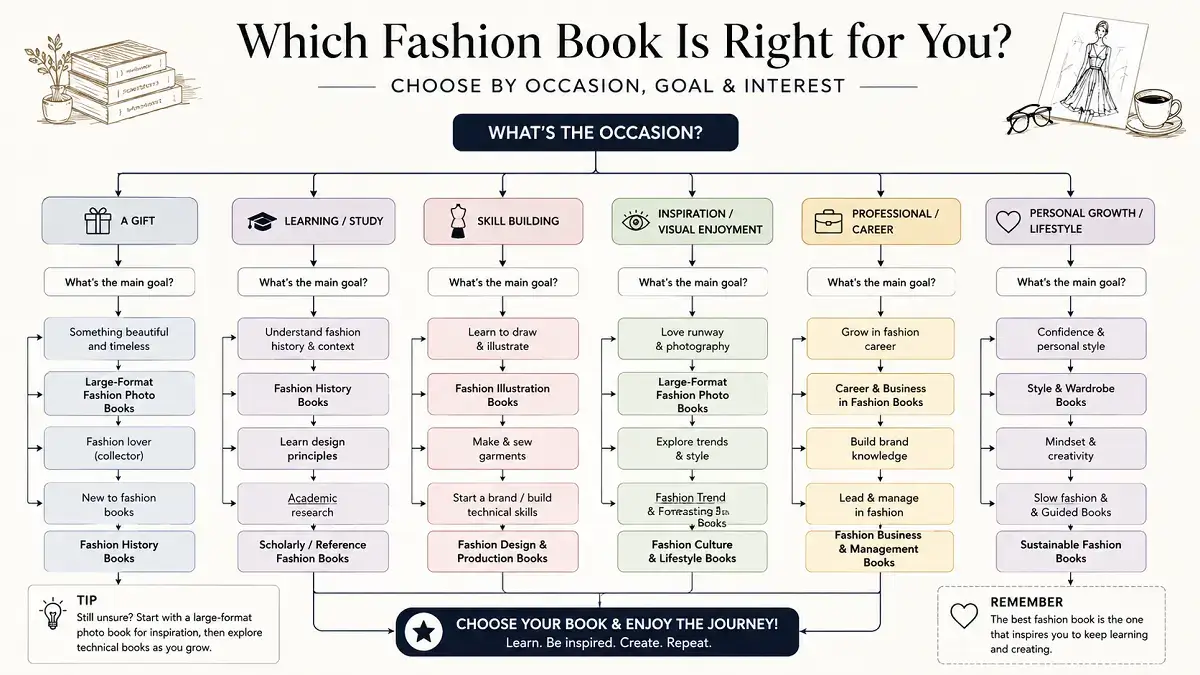
With six categories to pick from, a little filtering goes a long way. Use these questions to narrow your search:
- What’s the occasion? A gift or coffee-table piece calls for the photography/coffee-table category; a class or self-study project calls for design/technical or history titles.
- Do you want to read cover to cover or reference it occasionally? Memoirs, history and business titles are built for linear reading. Technical references like Fashionpedia or patternmaking guides are built for repeated lookup.
- Are you drawn to a specific designer or era or the industry as a whole? A single-house monograph or biography suits the former; a broader history or business title suits the latter.
- Format matters for how you’ll actually use it: Large-format hardcovers look great on display but are impractical for travel or note-taking; paperback technical guides are the opposite.
- Check the edition date for fast-moving subtopics: Business and sustainability titles age faster than history or technical craft books, since industry practices and statistics shift year to year.
Frequently Asked Questions
Conclusion
Fashion books aren’t one genre, they’re six, each built for a different kind of reader and a different reason to pick one up.
Once you know whether you’re shopping for a gift, studying the craft or reading for the story, the right shelf becomes obvious: coffee-table and photography books for visual inspiration, history books for cultural context, design and technical guides for hands-on skills, biographies for a personal narrative, business titles for the industry side and styling guides for your own wardrobe.
Use the comparison table above as a quick reference, then start with one title in the category that matches what you’re actually looking for.